Post Disclaimer
Disclaimer: This content is for educational purposes only, not medical advice. Always consult with a doctor before making significant changes to your diet, especially if you have pre-existing health conditions.
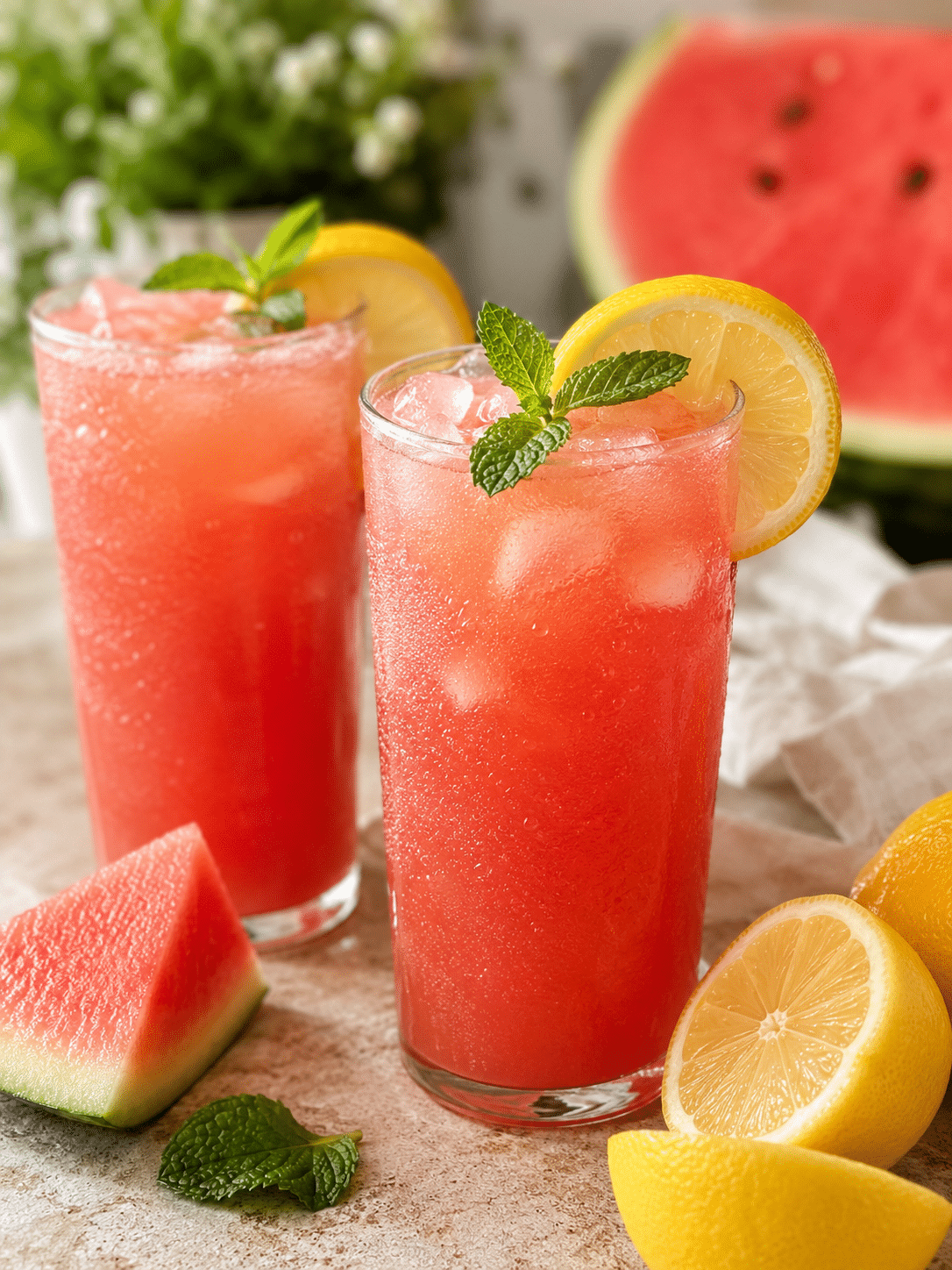
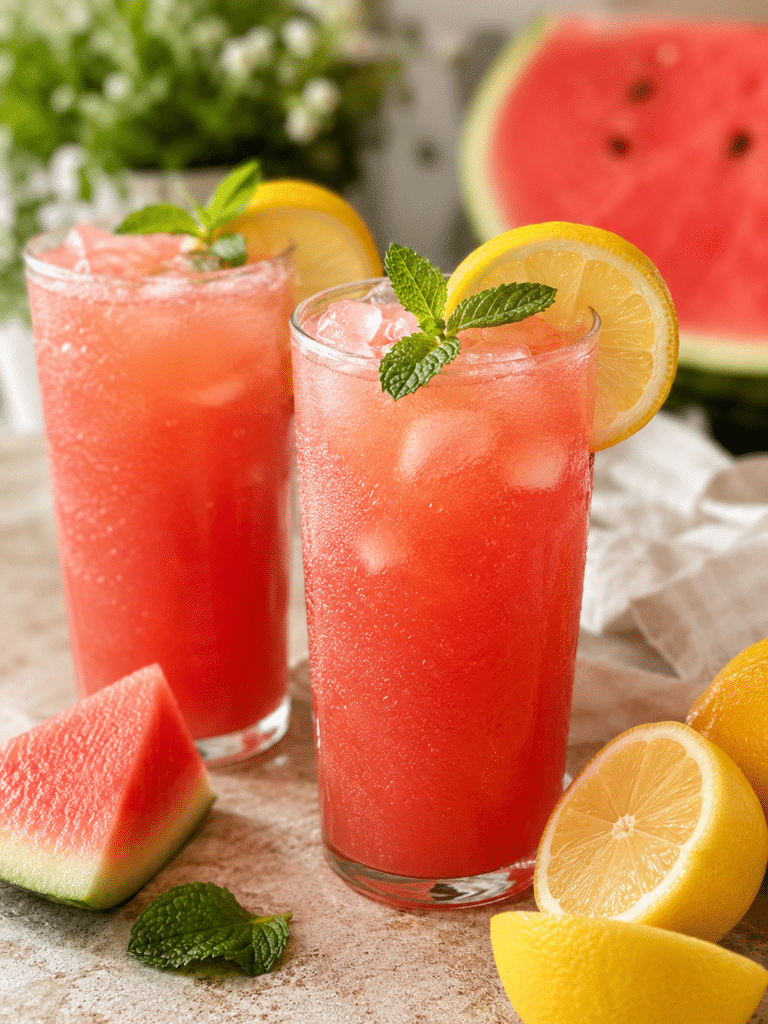
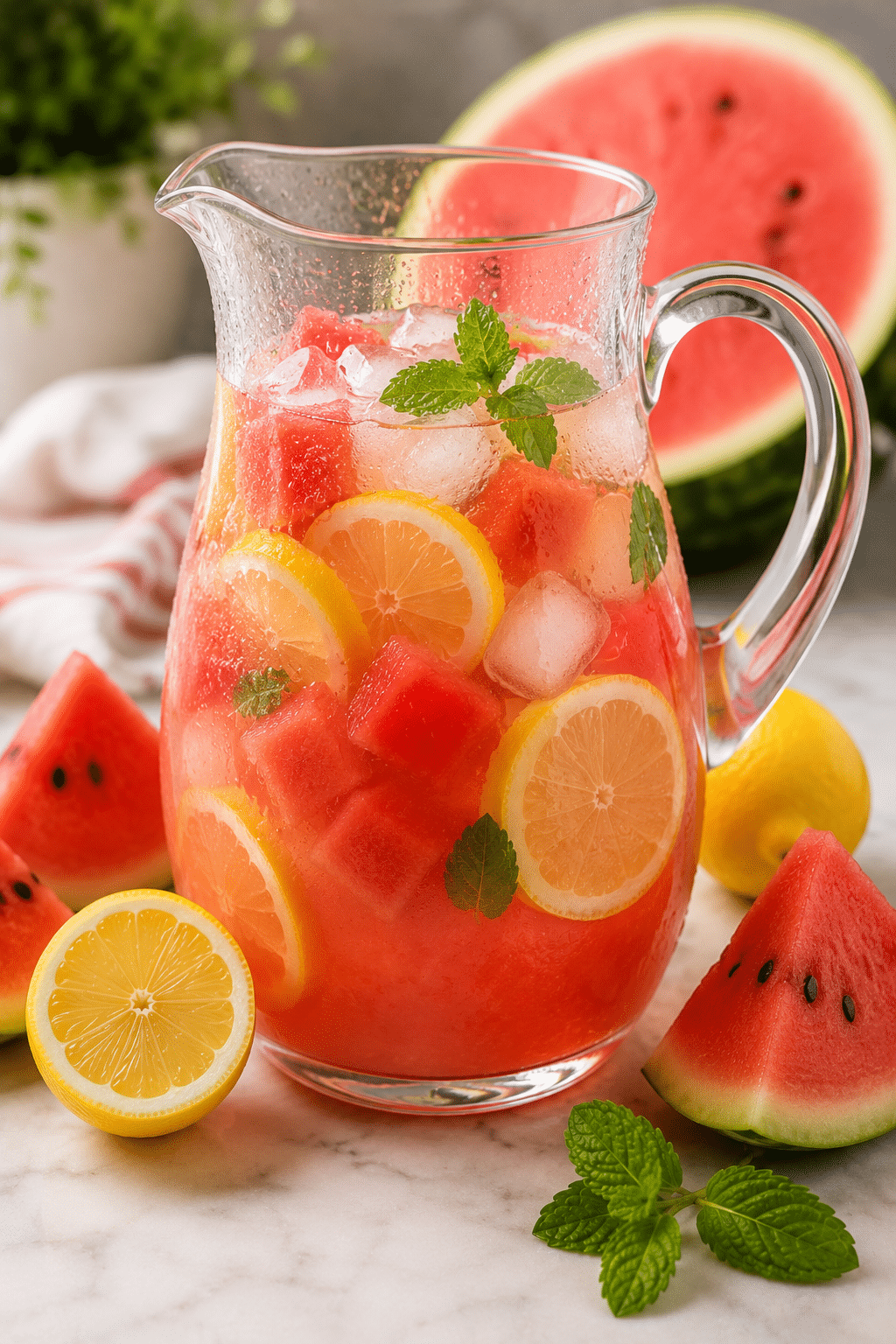
Watermelon lemonade recipe is a chilled drink made by blending ripe watermelon with fresh lemon juice, cold water, and just enough sweetener to balance the tang. It’s bright, fruity, quick to make, and perfect for cookouts, porch afternoons, lunchboxes, and easy summer entertaining.
The first time I made this Watermelon lemonade recipe for a backyard lunch, I didn’t plan on it becoming the drink everyone asked for again. I had half a watermelon sitting in the fridge, a bowl of lemons on the counter, and that kind of sticky summer heat that makes plain water feel boring after the second glass. I blended the watermelon, squeezed in fresh lemon juice, stirred it over ice, and watched the color turn into the prettiest ruby-pink pitcher. Before the food even hit the table, the lemonade was almost gone.
That’s the magic of a good Watermelon lemonade recipe. It feels special, but it doesn’t ask much from you. You don’t need a long ingredient list, fancy syrups, or a restaurant soda machine. You need juicy watermelon, real lemons, cold water, and a little patience while it chills. In my kitchen, I’ve found that the best version tastes like watermelon first, lemon second, and sugar last. The fruit should carry the drink, not hide under a heavy syrup.
This Watermelon lemonade recipe also solves one of my favorite summer problems: what to do with a watermelon that’s sweet but too big for everyone to finish plain. Blend it. Strain it if you want it smooth. Leave a little pulp if you like that fresh fruit feeling. Then add lemon juice until the drink wakes up. Watermelon is soft and mellow on its own, while lemon brings the clean, sharp edge that makes each sip feel crisp.
When I’m setting up a drink table, I’ll often make this pitcher next to something floral like lavender lemonade because the two look beautiful together and give guests a choice between fruity and fragrant. For family nights, this Watermelon lemonade recipe goes right into mason jars with crushed ice and lemon wheels. For baby showers or brunch, I pour it into a glass dispenser and add fresh mint so it looks party-ready without extra work.
After making this dozens of times, I’ve learned that the real secret isn’t more sugar. It’s ripe fruit, fresh citrus, and a pinch of salt. That tiny pinch doesn’t make the drink salty. It makes the watermelon taste more like itself. One reader, Maya, told me, “I made this for my kids after soccer practice, and they asked why it tasted like a snow cone but better.” That made me smile because that’s exactly the feeling this Watermelon lemonade recipe gives: playful, cold, fruity, and easy to love.
If you’ve searched for Watermelon Lemonade near me after trying a restaurant version, this homemade pitcher gets you there with fresher flavor and more control. You can make it sweeter, tarter, fizzy, or sugar-free. You can even turn it into a freezer concentrate for later. And while some people look for a Watermelon lemonade cocktail, this Cheflora version stays alcohol-free, bright, and family-friendly, so everyone at the table can enjoy it.
Table of Contents
Key Takeaways
- This Watermelon lemonade recipe tastes best with cold, ripe seedless watermelon and freshly squeezed lemon juice.
- A small pinch of salt makes the watermelon flavor taste rounder without making the drink salty.
- You can make Watermelon lemonade recipe no sugar by skipping added sweetener or using a mild sweetener you already like.
- Straining the blended watermelon gives a smoother drink, while leaving the pulp makes it feel more like fresh juice.
- For a party, chill the base first and add ice only when serving so the flavor doesn’t get watery.
- You can turn this into Watermelon Lemonade Soda with sparkling water added right before pouring.
- The same base works as a Watermelon lemonade concentrate recipe when you reduce the water and freeze it in cubes.
Why does this Watermelon lemonade recipe taste so fresh?
This Watermelon lemonade recipe tastes fresh because it uses real fruit, fresh lemon juice, cold water, and a light hand with sweetener. The watermelon gives natural sweetness and color, while the lemon juice adds brightness that keeps the drink crisp instead of flat.
What ingredients do you need for the best flavor?
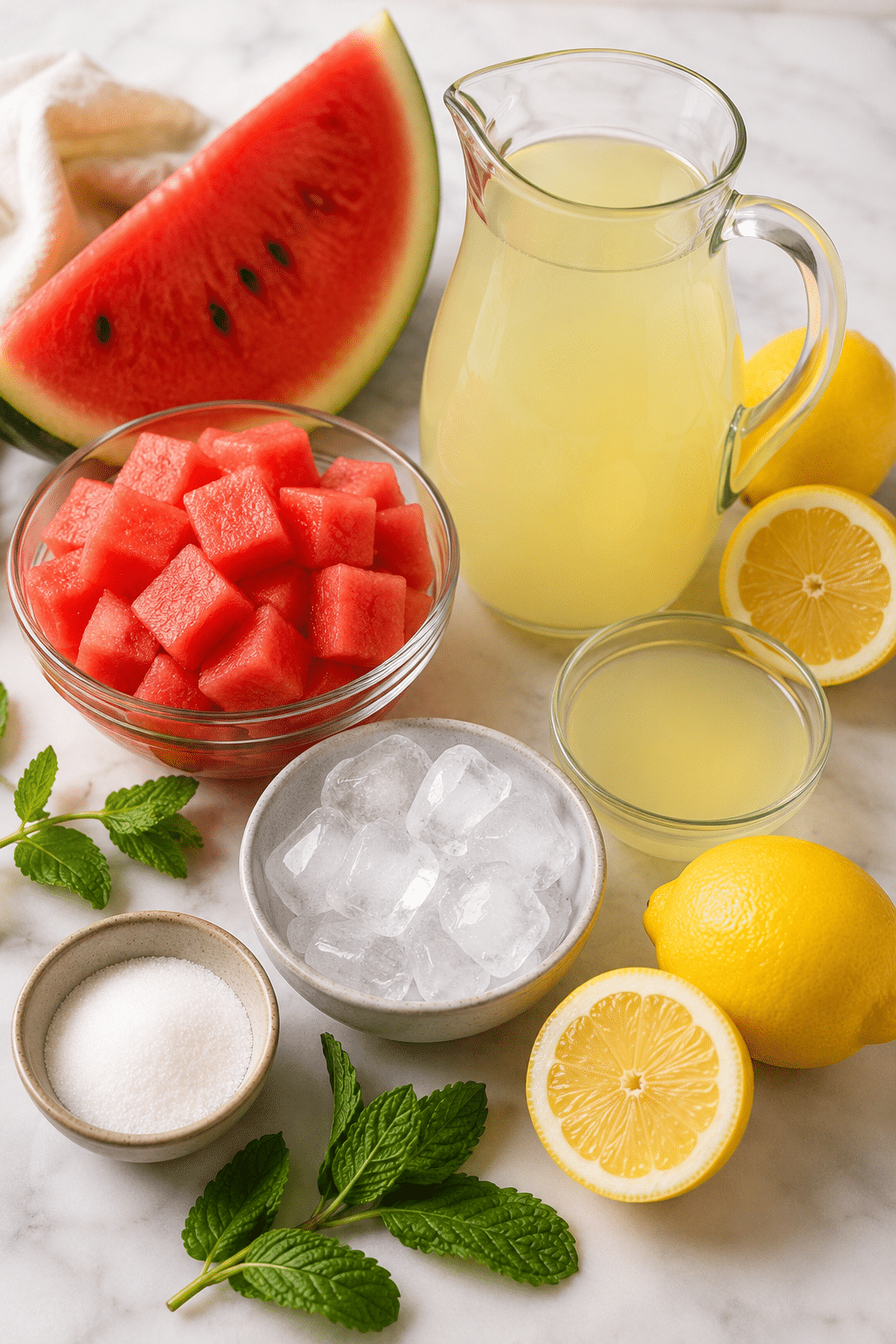
A simple Watermelon lemonade recipe should taste clean, juicy, and balanced. I start with seedless watermelon because it blends smoothly and saves time. Look for watermelon that smells lightly sweet once cut, has deep red flesh, and feels heavy for its size. If the watermelon tastes bland when you sample a cube, the pitcher will taste bland too, so don’t be shy about checking before you blend. You’ll need about six cups of cubed watermelon for a generous pitcher, though this Watermelon lemonade recipe is forgiving if you have a little more or less.
Fresh lemon juice matters here. Bottled lemon juice can taste dull or sharp in a way that doesn’t blend well with watermelon. Real lemons give the drink a clean finish, and the zest from the peel perfumes your hands while you’re squeezing them, which always makes the kitchen feel brighter. I use about three-fourths cup lemon juice for this Watermelon lemonade recipe, then adjust after chilling. Cold drinks taste less sweet, so I always taste again after the pitcher sits in the fridge.
Here’s the basic recipe table I use in my kitchen:
| Ingredient | Amount | Why it matters |
|---|---|---|
| Seedless watermelon cubes | 6 cups | Gives natural sweetness, color, and body |
| Fresh lemon juice | 3/4 cup | Adds tart balance and a clean finish |
| Cold water | 2 cups | Thins the juice into lemonade |
| Sugar, honey, or maple syrup | 2 to 4 tablespoons | Optional, based on fruit sweetness |
| Fine salt | 1 small pinch | Makes the watermelon taste fuller |
| Ice | For serving | Keeps each glass cold |
This Watermelon lemonade recipe pairs beautifully with other bright drinks, and when I want a citrus table with more than one flavor, I’ll serve it near my pink lemonade recipe so guests can pick between berry-pink tartness and watermelon sweetness.
How do you pick watermelon that won’t taste watery?
The best Watermelon lemonade recipe starts before the blender comes out. I look for a creamy yellow field spot, a heavy feel, and a rind that looks more matte than shiny. The field spot is where the watermelon rested on the ground while ripening, and a deeper yellow patch usually means better sweetness. Give it a tap, too. You want a hollow sound, not a dull thud. None of these tricks are perfect, but together they help.
Cut the watermelon into chunks and taste one piece before blending. If it tastes very sweet, begin with less sweetener. If it tastes mild, use the lemon juice carefully and add sweetener in small spoonfuls. The goal of this Watermelon lemonade recipe isn’t to turn weak fruit into candy. It’s to let good fruit shine. I’ve had better results adding more watermelon than adding more sugar because more fruit gives both flavor and texture.
For a smoother pitcher, blend the watermelon in batches, then strain it through a fine-mesh sieve. Press gently with a spoon, but don’t mash the pulp too hard or the drink can get cloudy. If you like a rustic glass, skip the straining. I do both depending on the day. For company, I strain. For a weeknight, I leave it as-is and call it fresh. Either way, this Watermelon lemonade recipe should feel cooling from the first sip.
Watermelon Lemonade Recipe
Equipment
- Blender
- fine mesh sieve optional
- large pitcher
- mixing spoon
- serving glasses
Ingredients
- 6 cups seedless watermelon, cubed
- 3/4 cup fresh lemon juice
- 2 cups cold water
- 2-4 tbsp sugar, honey, or maple syrup, to taste
- 1 pinch fine salt
- ice, for serving
- fresh mint (optional)
- lemon wheels (optional)
- watermelon wedges (optional)
Instructions
- Add the watermelon cubes to a blender and blend until smooth.
- Strain the watermelon juice through a fine-mesh sieve for a smoother lemonade, or leave it unstrained for a pulpy fresh-fruit texture.
- Pour the watermelon juice into a large pitcher.
- Stir in the fresh lemon juice, cold water, sweetener, and a small pinch of salt.
- Taste and adjust. Add more lemon juice for tartness, more sweetener for softness, or more water if the flavor feels too strong.
- Chill for at least 30 minutes.
- Serve over ice with mint, lemon wheels, or small watermelon wedges.
Notes
Nutrition
How do you make watermelon lemonade step by step?
What is the easiest blending method?
The easiest way to make this Watermelon lemonade recipe is to blend the watermelon first, mix the lemon juice separately with sweetener, then combine everything in a pitcher. That order gives you control. If you put everything into the blender at once, you may over-sweeten before you know how juicy the watermelon is. I like to blend the fruit until it looks smooth and glossy, then pour it through a sieve into a large measuring bowl.
Add the fresh lemon juice to the pitcher next. If you’re using granulated sugar, stir it into a small amount of warm water first so it melts before it hits the cold fruit juice. That little step prevents sandy sugar at the bottom of the pitcher. For honey, thin it with a splash of warm water too. Maple syrup stirs in faster and gives a mellow flavor, though it can slightly darken the color. This Watermelon lemonade recipe works with any of them, but plain sugar keeps the fruit flavor most direct.
Here’s the method I use:
| Step | What to do | Chef Lora tip |
|---|---|---|
| 1 | Blend watermelon until smooth | Work in batches so the blender doesn’t splash |
| 2 | Strain, if desired | Strain for a smooth restaurant-style finish |
| 3 | Stir lemon juice with sweetener | Start small; you can add more |
| 4 | Add cold water and salt | Salt makes the fruit pop |
| 5 | Chill for 30 minutes | Cold rest gives better balance |
| 6 | Serve over ice | Add mint or lemon wheels right before pouring |
This Watermelon lemonade recipe is also a sweet fit for a summer drink spread. When I’m setting out pitchers for a crowd, I like to add a creamy option like creamy lemonade because its soft, dessert-like flavor contrasts nicely with the sharper watermelon-lemon sip.
How do you balance sweet, tart, and cold?
Taste is everything with a Watermelon lemonade recipe because watermelons don’t all taste the same. After you stir the pitcher, chill it before making final changes. A room-temperature sip can seem sweeter than it will taste over ice. Once cold, taste a spoonful. If it makes your mouth pucker too much, add a tablespoon of sweetener or a splash more watermelon juice. If it tastes flat, add one tablespoon lemon juice. If it tastes thin, blend another cup of watermelon and stir it in.
In my kitchen, I’ve found that the pinch of salt is the tiny step people forget. Watermelon already has a gentle sweetness, and lemon can make that sweetness feel sharper. Salt brings the two together. It’s the same reason a little salt on fresh melon tastes so good. The Watermelon lemonade recipe should not taste salty at all. It should just taste more alive.
For a Watermelon lemonade recipe no sugar version, begin with very sweet watermelon and use only fruit, lemon juice, water, and salt. If the drink still needs softness, add a small amount of mashed ripe strawberry or a splash of unsweetened apple juice. Those choices keep the flavor fruity without turning the pitcher into syrup. You can also reduce the water slightly, which makes the watermelon taste stronger and helps the drink feel naturally sweeter.
Keep ice out of the pitcher until serving. Ice melts fast, and a watered-down pitcher makes even the best Watermelon lemonade recipe taste tired. Instead, chill the lemonade well, fill glasses with ice, and pour just before drinking. That way, every glass stays bright.
Can this Watermelon lemonade recipe be made no sugar or fizzy?
Yes, this Watermelon lemonade recipe can be made no sugar or fizzy. Use naturally sweet watermelon for the no-sugar version, then replace part of the cold water with sparkling water right before serving if you want a bubbly Watermelon Lemonade Soda.
How do you make Watermelon lemonade recipe no sugar?
A no-sugar Watermelon lemonade recipe depends on fruit that can stand on its own. This is not the time for pale, underripe watermelon. You want juicy cubes that taste sweet before anything else touches them. Blend six cups watermelon with three-fourths cup lemon juice, one to one and a half cups cold water, and a pinch of salt. Start with less water than the regular version because water dilutes sweetness. You can always add more after tasting.
If your lemons are extra sharp, reduce the lemon juice to one-half cup at first, then add more by the tablespoon. That gives you a cleaner Watermelon lemonade recipe no sugar without a harsh edge. I also love adding fresh mint or basil because herbs make the drink taste layered without adding sugar. Mint leans cooling and classic. Basil feels a little more grown-up and garden-fresh. Both work well with watermelon and lemon.
Some readers ask whether they can use stevia or monk fruit. You can, but go slowly. Those sweeteners can taste strong in cold drinks, especially when lemon is involved. Stir in a tiny amount, chill, and taste again. I’d rather have a lightly tart Watermelon lemonade recipe than one with a sweetener aftertaste. A reader named Jamal once told me, “I skipped the sugar and added mint. It tasted like something from a spa cooler, but my kids still drank it.” That’s the sweet spot.
For brunch, I sometimes place this pitcher beside peach lemonade because peach gives a soft, sunny sweetness while watermelon keeps things crisp and thirst-quenching.
How do you turn it into Watermelon Lemonade Soda?
To make Watermelon Lemonade Soda, prepare the base of this Watermelon lemonade recipe with less still water. Blend and strain the watermelon, stir in lemon juice, add sweetener if needed, and chill that concentrated base. Right before serving, pour it halfway into a glass with ice, then top with cold sparkling water or plain club soda. Stir gently so you keep the bubbles. Don’t add sparkling water to the pitcher too early because it will go flat.
This is one of my favorite party moves because it makes the drink feel festive without much effort. You can set out the chilled watermelon-lemon base, a bottle of sparkling water, mint sprigs, and lemon slices. Guests can pour their own Watermelon Lemonade Soda, which keeps the bubbles fresh and gives everyone control over strength. Kids usually like a little more soda. Adults often like more fruit base. Everyone wins.
A Watermelon lemonade recipe can also become a frozen slush. Pour the prepared lemonade into ice cube trays, freeze until firm, then blend the cubes with a splash of cold water. The texture turns frosty and spoonable, almost like a granita. This is helpful when the weather is truly hot and regular ice melts too quickly. The flavor stays strong because the ice cubes are made from the lemonade itself.
If you’re planning a drink station, this Watermelon lemonade recipe also sits nicely next to butterfly pea flower tea because the blue-purple tea and pink watermelon drink look stunning together in clear glasses.
How can you prep this for parties, concentrate, and restaurant-style flavor?
How do you make a Watermelon lemonade concentrate recipe?
A Watermelon lemonade concentrate recipe is just a stronger version of the pitcher base. Blend eight cups of watermelon and strain it. Stir in one cup fresh lemon juice, a pinch of salt, and sweetener to taste, but use only one-half cup water or skip the water completely. The idea is to make a base that tastes too strong on its own, because you’ll dilute it later with cold water, sparkling water, or ice.
Pour the concentrate into jars and chill it for up to two days, or freeze it in silicone trays. Once frozen, move the cubes to a freezer bag. For one glass, add three to four cubes to a cup, pour in cold water or sparkling water, and stir as they melt. This Watermelon lemonade concentrate recipe is handy when you don’t want to clean a blender every time someone wants a drink. It also saves watermelon that’s perfectly ripe today but may get mushy tomorrow.
For a big party, I make two batches of this Watermelon lemonade recipe concentrate the night before. I keep one plain and one with mint. Right before guests arrive, I mix the plain base with cold water in a drink dispenser and leave the mint base in a pitcher. I add ice to cups, not the dispenser, so the flavor stays steady. This helps the lemonade taste fresh from the first guest to the last.
When the table has snacks, sandwiches, and little desserts, I love sending guests to my lemonade bar recipes for more serving ideas because this Watermelon lemonade recipe fits right into that kind of build-your-own drink setup.
How close is this to Chili’s watermelon lemonade?
Chili’s exact restaurant formula isn’t something I can confirm here, and chain drinks can change by location or season. A copycat-style version usually starts with a sweet watermelon base, lemonade, ice, and sometimes a syrup-style watermelon flavor that keeps the taste bold and steady. Homemade tastes fresher because this Watermelon lemonade recipe uses real blended fruit instead of relying only on syrup.
To get closer to that restaurant-style sip, strain the watermelon very well and use a little simple syrup instead of dry sugar. Simple syrup gives the drink a smoother finish, which is common in restaurant beverages. Use equal parts sugar and water, warm them until dissolved, cool the syrup, then stir a small amount into the pitcher. Add it slowly. The goal is polished, not sticky. This Watermelon lemonade recipe should still taste like watermelon and lemon, not candy.
Restaurants often serve drinks over plenty of ice, so the first sip can be bold because the drink will dilute as it sits. At home, you can make the pitcher slightly stronger if you know it will sit in glasses for a while. Add extra watermelon juice or use less water. Lemon wheels, a watermelon wedge, and a mint sprig also make the glass feel restaurant-ready.
People who search “Watermelon Lemonade near me” usually want that cold, bright, sweet-tart drink without making a whole plan around it. This Watermelon lemonade recipe gives you that same cheerful feeling from your own fridge. And when I want another citrus drink with a creamy tropical twist, I’ll point readers toward my Brazilian lemonade recipe because it brings a totally different but equally refreshing mood.
What are the benefits, side effects, and best serving ideas?
Watermelon lemonade benefits come mostly from hydration, fruit flavor, and fresh lemon brightness. This drink can be a refreshing choice, but it’s still a beverage with natural sugars, and anyone with medical concerns should treat it like food, not a cure.
What does lemon juice do to watermelon?
Lemon juice makes watermelon taste brighter. Watermelon has a mellow sweetness and lots of water, so it can sometimes taste soft or plain once blended. Lemon juice adds acidity, and acidity sharpens fruit flavor. That’s why this Watermelon lemonade recipe tastes more refreshing than plain watermelon juice. The lemon doesn’t hide the melon. It gives it shape.
There’s also a practical reason to add lemon juice. A pitcher of watermelon juice can taste flat after chilling, especially if the fruit wasn’t deeply sweet. Lemon brings back the sparkle. In my kitchen, I’ve found that adding lemon juice a little at a time gives the best result. Too little and the drink tastes like watery melon. Too much and it becomes sour. The sweet spot for this Watermelon lemonade recipe is usually three-fourths cup lemon juice for six cups watermelon, but fruit changes, so tasting matters.
Some people search for watermelon with lemon juice benefits for male wellness, but I don’t like turning a summer drink into a promise it can’t keep. Watermelon and lemon can be part of a balanced pattern of eating, and they bring fluids, flavor, and some nutrients, but they don’t act like medicine. According to USDA FoodData Central, raw watermelon contains water, vitamin C, potassium, and natural sugars. That makes this Watermelon lemonade recipe a refreshing drink, not a health treatment.
For a gentler afternoon menu, I’ll sometimes serve it with coconut iced coffee for guests who want something creamy after their first fruity glass.
Are there watermelon and lemon juice side effects?
Watermelon and lemon juice side effects are usually mild for most people, but it depends on the person and the amount. Lemon juice is acidic, so too much can bother sensitive stomachs or feel harsh if someone deals with reflux. Watermelon contains natural sugars and plenty of water, so very large servings may feel uncomfortable for some people. This Watermelon lemonade recipe is meant for normal glasses, not huge servings all day long.
People with diabetes, kidney concerns, citrus sensitivity, or a medically guided diet should check with a qualified professional about what fits their needs. I keep the language simple because drinks can sound healthier than they are when fruit is involved. Yes, there are Watermelon lemonade benefits like hydration and a fun way to enjoy fruit, but added sugar still counts, and natural sugar is still sugar. That’s why I include a Watermelon lemonade recipe no sugar option and encourage tasting before adding sweetener.
For kids, I like serving smaller glasses over lots of ice with fruit slices. For adults at a family cookout, I keep it alcohol-free in the main pitcher. Some people search Watermelon lemonade cocktail, and for adult gatherings they may adapt the idea separately, but this Cheflora pitcher stays bright, safe for all ages, and easy to share.
If you’re putting this Watermelon lemonade recipe on a brunch table, pair it with a chilled coffee option like cold brew coffee recipe so guests have both fruity and bold drinks. For garnish, use lemon wheels, watermelon triangles, mint, basil, or frozen watermelon cubes. The drink itself is beautiful, so don’t overdo it. A clear glass, plenty of ice, and that pink color do most of the work.
FAQ
Is watermelon lemonade a thing?
Yes, watermelon lemonade is absolutely a thing, and it’s one of the easiest summer drinks to make at home. A Watermelon lemonade recipe combines blended watermelon juice with lemon juice, water, and optional sweetener. The watermelon brings natural sweetness and a bright pink-red color, while lemon juice gives the drink the tart edge that makes lemonade refreshing. You’ll see versions at restaurants, fairs, cookouts, and drink stands because the flavor is familiar but still a little special. Homemade watermelon lemonade tastes especially fresh because you can use real fruit instead of bottled flavoring. You can serve it still, fizzy, frozen, or as a no-sugar pitcher when your watermelon is naturally sweet.
How to make 3 ingredient lemonade?
To make 3 ingredient lemonade, stir together fresh lemon juice, cold water, and sugar until the sugar dissolves and the drink tastes balanced. A common starting point is one cup lemon juice, four cups water, and one-half to three-fourths cup sugar, then you adjust from there. For a Watermelon lemonade recipe, watermelon can replace part of the water and some of the sweetness. Blend fresh watermelon, strain it if you want a smooth texture, then mix it with lemon juice and cold water. If the watermelon is sweet enough, you may not need sugar at all. That gives you a simple three-ingredient watermelon lemonade: watermelon, lemon juice, and water.
How do Chili’s make their watermelon lemonade?
Chili’s exact watermelon lemonade method is not something I can verify from my kitchen, and restaurant recipes may vary by location or change over time. A copycat-style version usually tastes like lemonade mixed with a sweet watermelon base, served cold over plenty of ice. To get a similar feel at home, make this Watermelon lemonade recipe with strained watermelon juice, fresh lemon juice, cold water, and simple syrup instead of dry sugar. Simple syrup gives the drink that smooth restaurant finish. Chill the base well, pour it over ice, and garnish with a lemon wheel or watermelon wedge. The homemade version tastes fruitier because it uses real watermelon instead of only syrup.
What does adding lemon juice to watermelon do?
Adding lemon juice to watermelon makes the fruit taste brighter, fresher, and more balanced. Watermelon is sweet and watery, so when you blend it into juice, the flavor can sometimes feel soft. Lemon juice adds acidity, and that acidity sharpens the watermelon flavor. In a Watermelon lemonade recipe, lemon turns plain watermelon juice into a true lemonade-style drink with a sweet-tart finish. It also helps balance any added sugar, so the pitcher doesn’t taste heavy. The key is adding lemon gradually and tasting as you go. Too little lemon makes the drink flat, while too much can overpower the watermelon. The best glass tastes like both.
Conclusion: Why should you make this Watermelon lemonade recipe today?
This Watermelon lemonade recipe is the kind of drink that makes a regular afternoon feel like summer finally showed up with a cold pitcher in hand. It’s simple, colorful, and flexible enough for whatever you have planned. You can make it no sugar when the watermelon is sweet, turn it fizzy with sparkling water, freeze the concentrate for later, or dress it up with mint and lemon wheels for guests.
What I love most is how honest it tastes. Real watermelon. Real lemon. Cold water. A small pinch of salt. Nothing complicated. After making this Watermelon lemonade recipe again and again, I still think the best version comes from tasting as you go and letting the fruit lead. That’s how home cooking should feel: practical, personal, and delicious without fuss.
Serve it with lunch, pour it for a cookout, or keep a jar in the fridge for that moment when plain water just won’t do. Grab a ripe watermelon, squeeze a few lemons, and try this Watermelon lemonade recipe while the pitcher can still fog up on the counter.