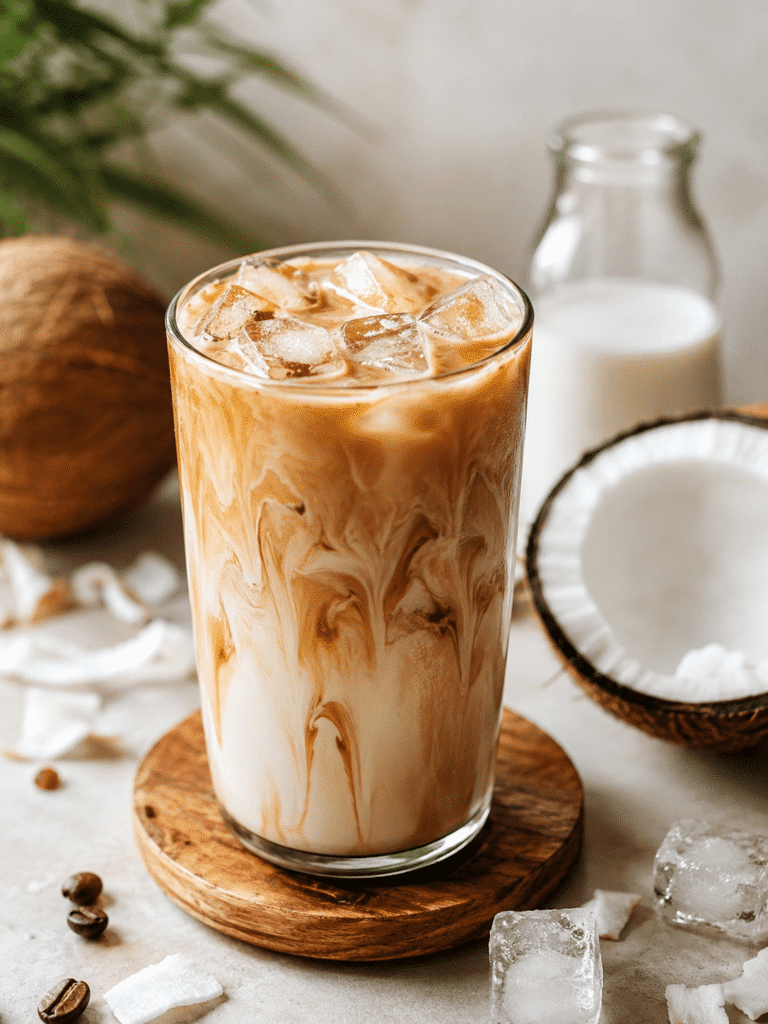
Post Disclaimer
Disclaimer: This content is for educational purposes only, not medical advice. Always consult with a doctor before making significant changes to your diet, especially if you have pre-existing health conditions.
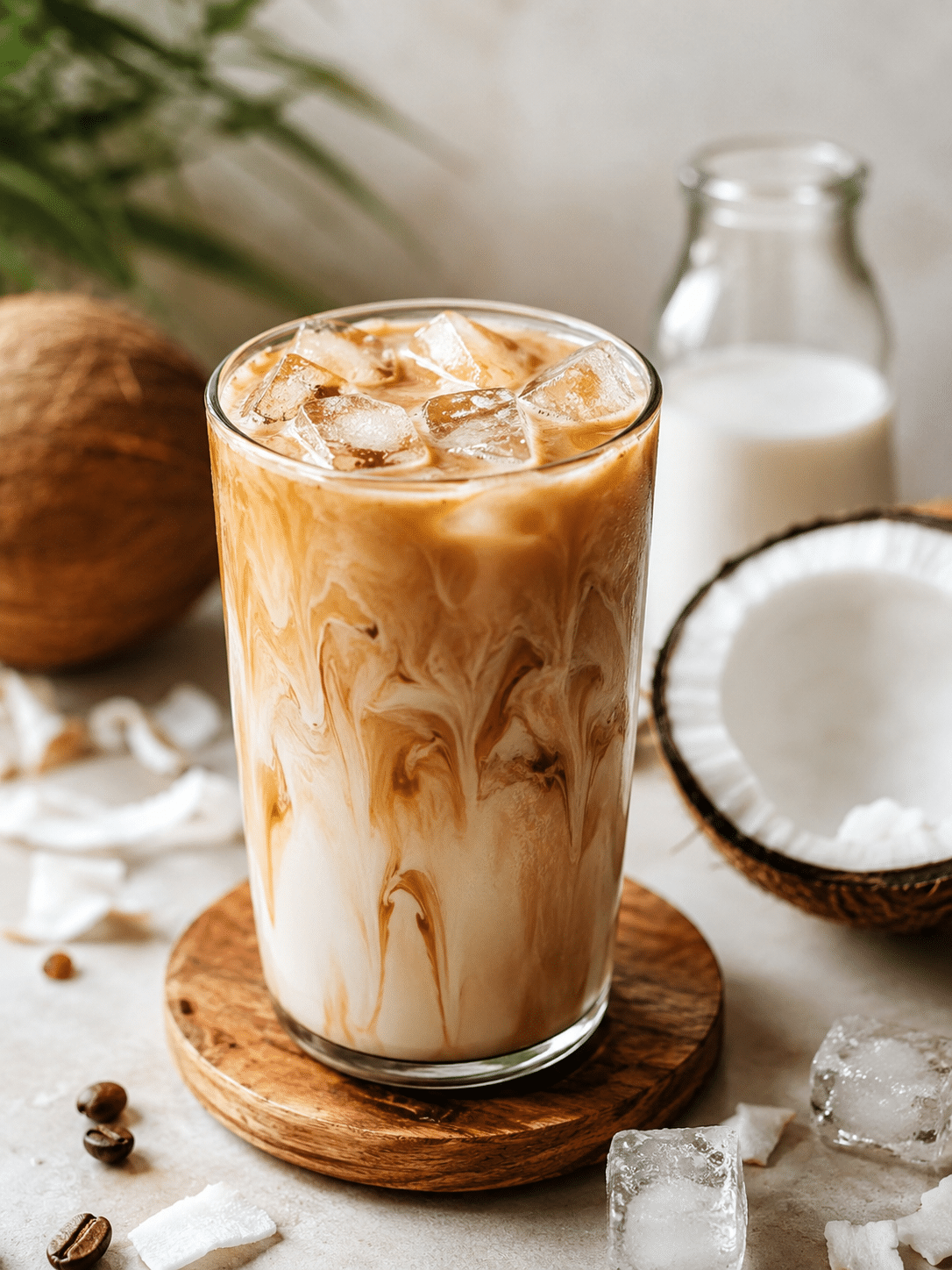
Coconut iced coffee is a creamy, chilled coffee drink made with strong coffee, coconut milk or coconut cream, ice, and a touch of sweetness. This easy homemade version gives you café-style flavor in minutes, with a Vietnamese-style option and no blender required.
The first time I made Coconut iced coffee in my kitchen, I wasn’t trying to create anything fancy. It was one of those hot afternoons where the counters felt warm, the ice maker was working overtime, and a regular cup of coffee just sounded too heavy. I had leftover cold brew in the fridge, half a can of coconut milk, and a craving for something creamy but still bright and refreshing. I poured everything over ice, gave it a good stir, and that first sip stopped me right there.
It tasted like coffee, dessert, and vacation all in one glass.
That’s why I keep coming back to Coconut iced coffee. It’s simple, but it doesn’t taste plain. The coffee brings that deep roasted flavor, the coconut adds a silky tropical richness, and the ice keeps everything crisp. You can make it sweet like a Vietnamese coconut coffee recipe, or you can keep it lighter with unsweetened coconut milk. You can use cold brew, espresso, strong brewed coffee, instant coffee, or even leftover morning coffee that you chilled in the fridge.
In my kitchen, I’ve found that the real trick is balance. Coconut iced coffee needs coffee that’s strong enough to stand up to the coconut. Weak coffee gets lost. Too much coconut cream can feel heavy. Too much sweetener covers the roasted notes. But when the ratio is right, it tastes smooth, cold, creamy, and bold.
I especially love making Coconut iced coffee when friends come over because it feels special without asking much from you. One reader, Maya, told me, “I made this after school for my family, and everyone thought I bought it from a café.” Another reader, Jordan, said the no-blender method saved him because he wanted Vietnamese coconut coffee without blender cleanup. That made me smile, because that’s exactly the kind of recipe Cheflora Recipes is here for: real food and drinks that fit real life.
For the coffee base, you can use my cold brew coffee recipe when you want the smoothest flavor. Cold brew works beautifully in Coconut iced coffee because it has less sharpness and lets the coconut taste clean and rounded. Still, don’t worry if all you have is brewed coffee. Chill it, make it strong, and you’re ready.
A small safety note, especially for anyone sensitive to caffeine: the FDA says that for most healthy adults, 400 milligrams of caffeine a day is not generally linked with dangerous effects, but caffeine sensitivity varies, so adjust your glass as needed with decaf or a smaller pour from the FDA’s caffeine guidance. The drink style also takes inspiration from Vietnamese iced coffee traditions, which are known for strong coffee and sweetened condensed milk, often served over ice, as described in Vietnamese iced coffee.
Table of Contents
Key Takeaways for Homemade Coconut Iced Coffee
- Coconut iced coffee works best with strong chilled coffee, cold brew, espresso, or Vietnamese-style coffee.
- You don’t need a blender; a jar with a lid or a handheld frother makes the coconut layer creamy.
- Full-fat coconut milk gives the richest texture, while carton coconut milk makes a lighter drink.
- Sweetened condensed milk gives it a Vietnamese-style flavor, but maple syrup, sugar syrup, or coconut sugar also work.
- Chill the coffee before serving so the ice doesn’t melt too fast and water down the glass.
- Shake the coconut milk before measuring because the cream and liquid can separate in the can.
- Coconut iced coffee is easy to prep ahead by keeping coffee and coconut mixture chilled separately.
What Makes Coconut Iced Coffee So Creamy and Easy?
Coconut iced coffee gets its creamy texture from coconut milk or coconut cream, while strong chilled coffee keeps the flavor bold. The easiest version needs only coffee, coconut milk, ice, and sweetener. You can stir it, shake it, or pour it in layers for a café-style glass.
Why does strong coffee matter so much?
Coconut iced coffee tastes best when the coffee has enough strength to hold its own. Coconut milk brings richness, and richness needs contrast. Think of it like adding cream to soup: the base has to have flavor before the cream goes in. Coffee works the same way. If you start with a weak brew, the coconut takes over, and you end up with something that tastes more like sweet coconut milk than a true coffee drink.
For a homemade coconut iced coffee recipe, I like cold brew because it’s smooth, steady, and easy to keep in the fridge. It doesn’t turn bitter when poured over ice, and it plays nicely with coconut. Espresso also works well, especially when you want that stronger café taste. Brewed coffee can be just as good, but make it a little stronger than usual and chill it before using. Hot coffee poured straight over ice melts everything too quickly, and Coconut iced coffee should feel cold and creamy, not thin and lukewarm.
If you like other cold drinks, this recipe sits right next to a creamy iced matcha latte in the way it gives you that cozy café feeling with almost no effort. The difference is that Coconut iced coffee leans deeper and roastier, while matcha tastes grassy and soft. Both are easy, but coffee gives you that bold edge.
Vietnamese style coconut coffee often uses a strong coffee base, which is why it tastes so memorable. You don’t need special equipment to borrow that idea. Use dark roast coffee, a concentrated cold brew, or a strong instant coffee if that’s what you have. After making this dozens of times, I’ve learned that the coffee should taste slightly too strong before you add the coconut. Once the ice, milk, and sweetener join in, it lands right where you want it.
Which coconut milk gives the right texture?
The coconut you choose changes the whole mood of Coconut iced coffee. Full-fat canned coconut milk gives the richest body, with that creamy layer that clings to the glass. Coconut cream makes it even thicker and more dessert-like. Carton coconut milk, the kind sold near almond milk, makes a lighter drink that’s still refreshing but not as lush. All three work, but they don’t give the same result.
For an easy homemade coconut iced coffee, canned coconut milk is my usual pick. Shake the can hard before opening it, because coconut cream rises to the top. If it’s still separated, whisk it in a bowl or shake it in a jar. That one tiny step makes the drink smoother. Nobody wants little coconut clumps floating around unless they’re going for a blended texture, and we’re keeping this simple.
Sweetener matters too. Sweetened condensed milk gives Coconut iced coffee that Vietnamese-style sweetness and body. Coconut sugar syrup adds a warm caramel note. Maple syrup blends quickly and tastes gentle. Plain simple syrup works when you want the coffee and coconut to shine without extra flavor. Granulated sugar can work, but stir it into warm coffee first so it dissolves fully.
I don’t recommend using only coconut water here. It’s refreshing, but it doesn’t bring the creamy texture people want from Coconut iced coffee. You can add a splash of coconut water if you want a lighter finish, but keep some coconut milk in the glass. That’s where the smoothness comes from.
How Do You Make Coconut Iced Coffee Without a Blender?
You can make Coconut iced coffee without a blender by shaking coconut milk, sweetener, and a pinch of salt in a jar until smooth, then pouring it over ice and strong chilled coffee. This gives a creamy Vietnamese coconut coffee without blender mess or extra tools.
What ingredients do you need for one glass?
The ingredient list for Coconut iced coffee is short, which is why I make it so often. You don’t need syrups from a coffee shop or a counter full of gadgets. You need good coffee, coconut milk, ice, sweetness, and a little pinch of salt. That salt doesn’t make the drink salty. It makes the coconut taste rounder and helps the coffee feel less harsh.
| Ingredient | Amount | Notes |
|---|---|---|
| Strong chilled coffee or cold brew | 3/4 cup | Use dark roast, espresso over ice, or cold brew |
| Full-fat coconut milk | 1/3 cup | Shake well before measuring |
| Sweetened condensed milk | 1 to 2 tablespoons | Use more for Vietnamese-style sweetness |
| Ice | 1 cup | Use large cubes if possible |
| Pinch of salt | Tiny pinch | Balances the sweet coconut flavor |
| Toasted coconut, optional | 1 teaspoon | For garnish |
| Extra coconut cream, optional | 1 tablespoon | For a richer top layer |
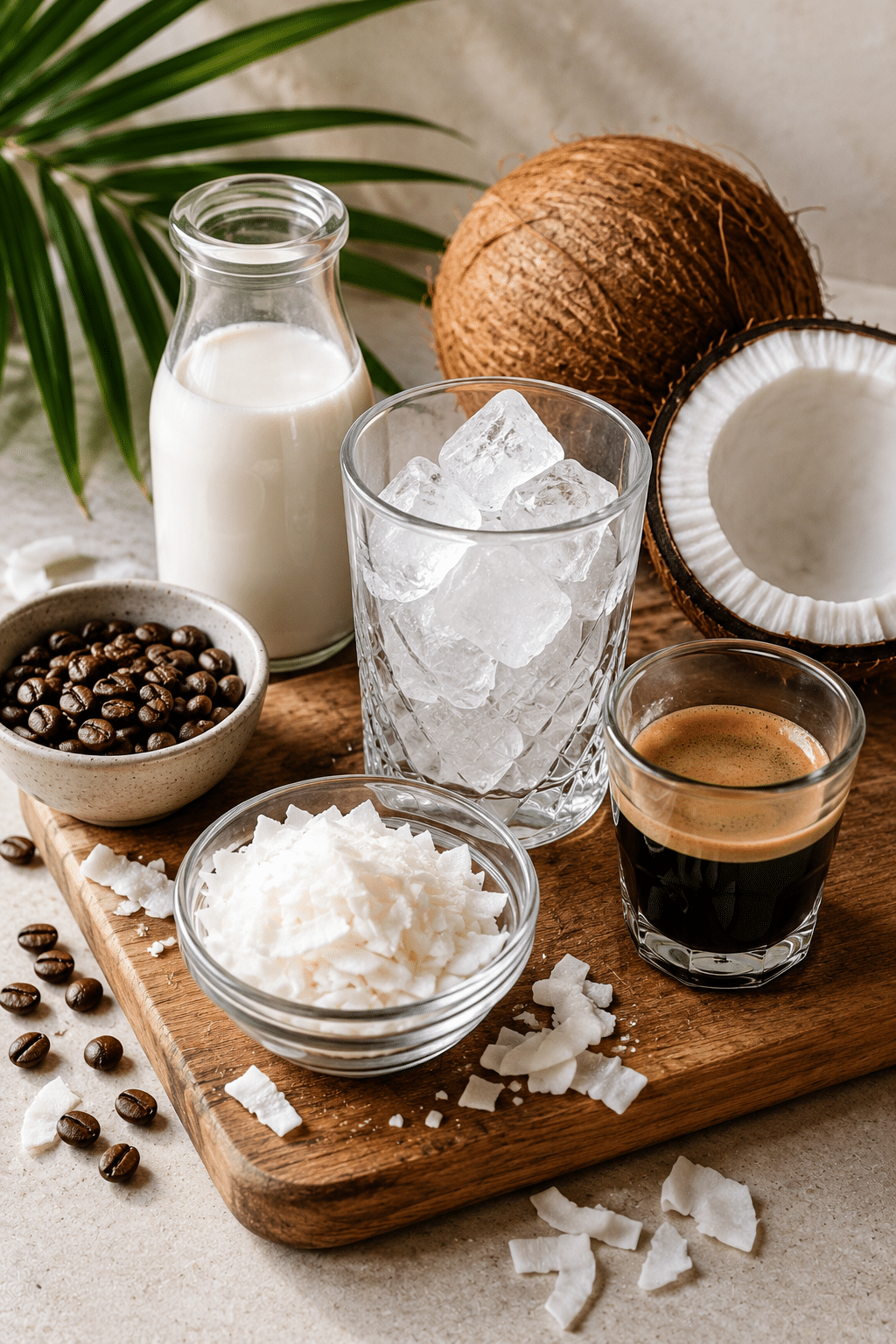
For iced coffee using coconut milk, start with unsweetened coconut milk so you control the sweetness. If your coconut milk already has sugar, taste before adding condensed milk or syrup. Coconut iced coffee should taste creamy and sweet enough, but still like coffee. If it tastes like melted ice cream, it’s probably too sweet. If it tastes sharp or watery, it needs more coconut milk or a little more sweetener.
You can make this homemade coconut iced coffee with decaf coffee too. The flavor stays lovely, and it’s a good choice later in the day. When I serve this alongside a bright summer drink like my homemade iced tea recipe, I’ll often make both regular and decaf coffee bases so everyone has an easy option.
A jar is your best friend here. Add the coconut milk, condensed milk, and salt. Close the lid tight. Shake until the mixture looks smooth and glossy. That’s the whole no-blender trick. It breaks up the coconut cream and gives the drink a softer texture. You can also use a milk frother for 10 to 15 seconds, but the jar method works beautifully.
What are the step-by-step instructions?
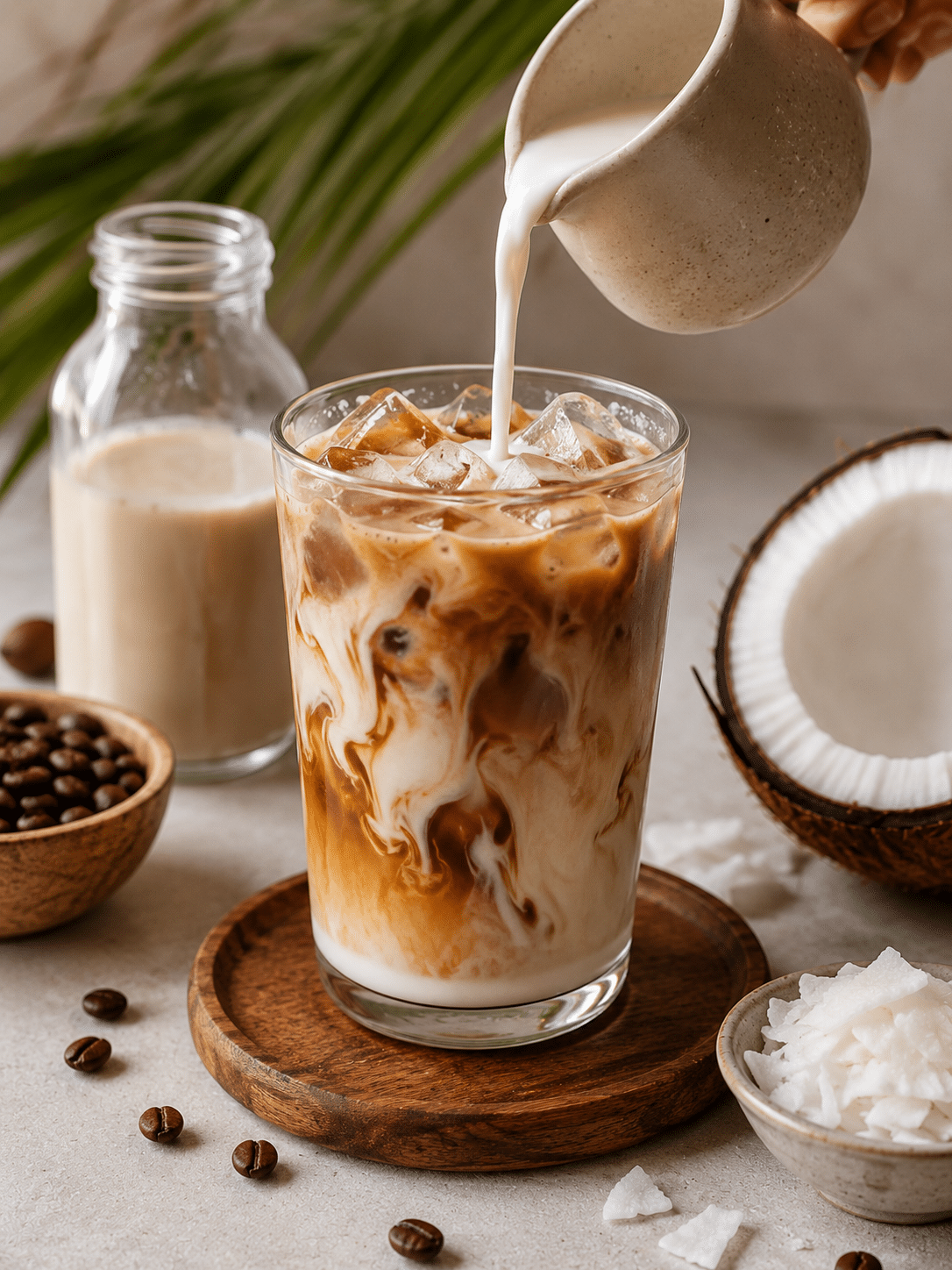
To make Coconut iced coffee, fill a tall glass with ice first. Pour in the strong chilled coffee. In a separate jar, shake the coconut milk, condensed milk, and salt until creamy. Pour that coconut mixture slowly over the coffee. Stir gently if you want everything blended, or leave it layered for that pretty café look.
Here’s the simple method I use:
| Step | What to do | Chef Lora tip |
|---|---|---|
| 1 | Chill your coffee | Cold coffee keeps the drink from turning watery |
| 2 | Shake coconut milk, sweetener, and salt | A jar makes it creamy without a blender |
| 3 | Fill glass with ice | Large cubes melt slower |
| 4 | Pour coffee over ice | Leave room for coconut milk |
| 5 | Add coconut mixture | Pour slowly for layers |
| 6 | Stir and taste | Add more coffee or sweetness as needed |
The best part of Coconut iced coffee is how forgiving it is. If it’s too strong, add more coconut milk. If it’s too creamy, add more coffee. If it needs sweetness, stir in condensed milk or syrup. If it feels flat, add one more tiny pinch of salt. You’re not locked into one exact path.
For a Vietnamese coconut coffee recipe feel, use sweetened condensed milk and very strong coffee. A phin filter gives a more traditional taste, but you don’t need one. Strong brewed coffee or concentrated cold brew still gets you close. The condensed milk brings that thick sweetness people love in Vietnamese style coconut coffee, while the coconut adds a creamy tropical layer.
Coconut iced coffee also makes a great drink for gatherings. Set out chilled coffee, shaken coconut milk, ice, and sweetener so people can build their own glasses. It pairs nicely with fresh drinks like a virgin mojito recipe when you want a table of cold drinks that feels fun but still easy.
How Do You Get Vietnamese-Style Coconut Coffee Flavor at Home?
Vietnamese-style Coconut iced coffee comes from strong coffee, creamy coconut milk, and sweetened condensed milk. The flavor should taste bold, sweet, chilled, and silky. You can make it with a phin filter, espresso, cold brew concentrate, or strong brewed coffee.
How can you mimic a Vietnamese coconut coffee recipe?
Vietnamese coconut coffee recipe inspiration usually starts with intensity. The coffee tastes strong, the sweetness feels rich, and the cold coconut layer softens everything without making it dull. At home, the easiest way to reach that flavor is to brew coffee stronger than you normally would. Use less water, add an extra spoonful of coffee grounds, or use cold brew concentrate.
Coconut iced coffee with Vietnamese-style flavor doesn’t have to be complicated. I’ve made it with espresso, moka pot coffee, cold brew, instant espresso powder, and regular drip coffee brewed double strength. All of them worked when the coffee tasted bold enough. The only version that disappointed me was weak leftover coffee from a half-full pot. It tasted thin once the coconut milk and ice went in.
Sweetened condensed milk is the classic move here. It brings sweetness and body at the same time. Start with one tablespoon if you like moderate sweetness, and use two tablespoons if you want the drink closer to a café dessert. Stir or shake it with the coconut milk first so it doesn’t sink to the bottom of the glass.
For Vietnamese coconut coffee without blender texture, use coconut cream instead of some of the coconut milk. A tablespoon of coconut cream shaken with condensed milk gets thick enough to feel special. Then pour it slowly over the coffee. You’ll see creamy white swirls moving through the dark coffee, and that’s half the joy.
Coconut iced coffee is also lovely with a little vanilla. Just a few drops can soften the edges. Don’t add too much, though, or it starts tasting more like a milkshake than coffee. If you want another fruity drink for a warm afternoon, my strawberry lemonade mocktail brings a sweet-tart contrast next to this richer coffee.
What’s the right balance of sweet, strong, and creamy?
The right Coconut iced coffee balance starts with a simple ratio: about 3 parts strong coffee to 1 part coconut milk. From there, adjust sweetness to taste. If you use cold brew concentrate, you may want a little more coconut milk. If you use regular chilled coffee, stay closer to the ratio so the drink doesn’t get too mild.
Here’s the flavor test I use in my kitchen. Take one sip before stirring fully. You should taste coffee first, then coconut, then sweetness. If sweetness hits first, cut back next time or add more coffee now. If coconut hits first and coffee disappears, your coffee base needs more strength. If everything tastes sharp, you need a little more coconut milk or condensed milk.
Coconut iced coffee should feel smooth, not heavy. Coconut cream can be wonderful, but too much makes the glass taste thick. I like using full-fat coconut milk for the main pour and saving coconut cream for a small top layer. That gives you the creamy look and feel without turning the drink into dessert soup.
Ice matters more than people think. Crushed ice chills fast but melts fast. Big cubes keep Coconut iced coffee colder longer without watering it down. For a party, you can freeze coffee into ice cubes and use those in the glass. As they melt, they add more coffee instead of water. That’s a simple trick, but it makes a big difference.
When I want an extra treat, I rim the glass with a little toasted coconut. It smells warm and nutty against the cold drink. Just don’t overdo toppings. Coconut iced coffee shines because it’s clean, cold, and creamy. Too many extras can hide the flavor you worked to build.
What Variations Can You Make With Coconut Iced Coffee?
Coconut iced coffee can be made light, rich, dairy-free, decaf, extra strong, or Vietnamese-style. Change the coffee base, coconut milk, and sweetener to fit your taste. Keep the coffee bold and the coconut smooth, and the drink will stay balanced.
Can you make it dairy-free or lighter?
Yes, Coconut iced coffee can be fully dairy-free. Skip sweetened condensed milk and use maple syrup, simple syrup, coconut sugar syrup, agave, or date syrup. If you want a condensed-milk feel without dairy, look for sweetened condensed coconut milk. It’s thick, sweet, and very rich, so start with a small spoonful.
For a lighter homemade coconut iced coffee, use refrigerated carton coconut milk. It won’t taste as creamy as canned coconut milk, but it keeps the drink crisp and easy to sip. You can also mix half carton coconut milk and half canned coconut milk. That gives you a nice middle ground: creamy enough to feel satisfying, but not so rich that it feels heavy.
Coconut iced coffee can also be made with oat milk plus a spoonful of coconut cream. That’s a good trick when you want coconut flavor but don’t want the full intensity of coconut milk. Almond milk works too, though it makes the drink thinner. Whole dairy milk will taste good, but then the coconut flavor needs a little help from coconut cream or coconut syrup.
If you like frozen drinks, you can pour the same ingredients over crushed ice and stir hard for a slushy feel. I still wouldn’t pull out a blender unless you really want a frappe. The no-blender version keeps cleanup easier and lets the coffee taste more direct. For guests who love icy fruit drinks, I often serve Coconut iced coffee with a mango frozen drink so there’s a bright tropical option beside the coffee.
For decaf, use decaf cold brew or strong decaf coffee. The coconut and sweetener carry flavor well, so you won’t feel like you’re missing out. This is especially useful if you want Coconut iced coffee later in the afternoon but don’t want caffeine close to bedtime.
What flavors go well with coconut and coffee?
Coconut iced coffee plays well with vanilla, cinnamon, chocolate, caramel, cardamom, and toasted coconut. You only need a little. A pinch of cinnamon adds warmth. A drizzle of chocolate syrup turns it into a coconut mocha. A small spoonful of caramel gives it a deeper sweetness. Cardamom adds a fragrant twist that tastes beautiful with dark roast coffee.
One of my favorite versions is coconut mocha iced coffee. Add one teaspoon of cocoa powder to warm coffee, stir until smooth, chill it, then build the drink with coconut milk. Another easy version is salted maple Coconut iced coffee. Use maple syrup instead of condensed milk and add a slightly bigger pinch of salt. It tastes cozy but still refreshing.
For a Vietnamese style coconut coffee feel with less dairy, use strong coffee, full-fat coconut milk, and condensed coconut milk. That gives you the thick sweetness and tropical flavor in one glass. You can also add a spoonful of coconut cream on top and let it slowly sink into the coffee. It looks beautiful and tastes even better.
Coconut iced coffee also works as a brunch drink. Serve it with fruit, toast, muffins, or a simple breakfast plate. Since it’s creamy, I like pairing it with something crisp or fresh. A pitcher of fruit punch recipe on the table gives non-coffee drinkers something colorful, while the coffee fans reach for this chilled glass.
Don’t forget texture. Toasted coconut flakes add a little crunch if you sprinkle them on top right before serving. Coffee ice cubes make the drink stronger as it sits. A frothy coconut layer makes it feel like it came from a café. Small details make Coconut iced coffee feel special without making the recipe harder.
How Do You Store, Serve, and Fix Coconut Iced Coffee?
Store Coconut iced coffee by keeping the coffee and coconut mixture separate in the fridge, then pour over ice right before serving. This keeps the drink fresh, cold, and creamy. If it tastes too strong, sweet, thin, or rich, small ratio changes fix it fast.
Can you prep it ahead?
You can absolutely prep Coconut iced coffee ahead, but don’t store it fully assembled over ice. Ice melts, and melted ice turns a creamy coffee into a watery one. Instead, keep chilled coffee in one jar and the coconut mixture in another. When you’re ready, shake the coconut jar, fill a glass with ice, pour, stir, and sip.
Cold brew keeps well in the fridge for a few days, making it the easiest base for homemade coconut iced coffee. Brewed coffee is best within a day or two because the flavor can get stale. Coconut milk mixture keeps for about two to three days when covered and chilled, though it may separate. That’s normal. Shake it hard or whisk it before using.
For parties, set up a Coconut iced coffee station. Put out a pitcher of strong chilled coffee, a jar of coconut milk mixed with sweetener, glasses, ice, and a few toppings. People can pour their own drinks, and you don’t have to stand in the kitchen making one glass at a time. Add a pitcher of cucumber mint water nearby for a cool, clean sip between sweeter drinks.
If you want to make the drink even easier, freeze coffee into ice cubes the night before. Use those cubes in each glass. They keep Coconut iced coffee from tasting watered down, especially on hot days. You can also freeze coconut milk in an ice cube tray, but it may separate a bit as it melts. Coffee cubes are more reliable.
Don’t store opened coconut milk in the can. Pour it into a covered container and refrigerate it. Shake or stir before using because the cream rises again. That’s not a problem. It’s just coconut being coconut.
How do you fix common problems?
If Coconut iced coffee tastes watery, the coffee was too weak or the ice melted too fast. Fix it by adding a shot of espresso, a splash of cold brew concentrate, or coffee ice cubes. Next time, chill the coffee fully before pouring. Warm coffee is the fastest way to lose that crisp iced texture.
If it tastes too bitter, add more coconut milk and a little sweetener. Bitterness often comes from over-brewed coffee or coffee that sat hot too long. Cold brew helps because it usually tastes smoother. A pinch of salt can also soften bitterness. I use that trick often, especially with dark roast coffee.
If Coconut iced coffee tastes too sweet, don’t toss it. Add more coffee and ice. You can also add a splash of unsweetened coconut milk. If it’s too rich, use half the amount of coconut cream next time and switch to regular coconut milk. If it’s too thin, add a spoonful of coconut cream or shake the canned coconut milk better before measuring.
If the coconut milk clumps, it was probably too cold, too separated, or not shaken enough. Warm the coconut milk for just a few seconds, whisk it smooth, then chill again. For a fast fix, put it in a jar and shake hard. Vietnamese coconut coffee without blender depends on this step, so don’t skip it.
Coconut iced coffee is forgiving, and that’s one reason I love it. You can correct almost anything in the glass. When you want another drink with that sweet-tart summer feeling, my blueberry lemonade makes a bright match beside this creamy coffee.
FAQ About Coconut Iced Coffee
What is Coconut iced coffee made of?
Coconut iced coffee is made with strong chilled coffee, coconut milk or coconut cream, ice, and sweetener. Many versions use cold brew because it tastes smooth over ice, but espresso, strong brewed coffee, or Vietnamese-style coffee also work. The coconut part can come from full-fat canned coconut milk, lighter carton coconut milk, coconut cream, or condensed coconut milk. For a Vietnamese-style version, sweetened condensed milk adds the thick sweetness people expect from café-style iced coffee. The basic idea is simple: bold coffee plus creamy coconut plus cold ice. From there, you can make it rich, light, dairy-free, decaf, or extra sweet depending on your taste.
Can you make Vietnamese coconut coffee without a blender?
Yes, you can make Vietnamese coconut coffee without a blender by using a jar, whisk, or milk frother. Add coconut milk, sweetened condensed milk, and a tiny pinch of salt to a jar. Close the lid tightly and shake until the mixture looks smooth and creamy. Then pour strong chilled coffee over ice and add the coconut mixture on top. This method gives you a creamy Coconut iced coffee without the thicker frozen texture of a blended drink. It’s faster, quieter, and much easier to clean up. For the strongest Vietnamese-style flavor, use dark roast coffee, espresso, or cold brew concentrate.
Can I make Coconut iced coffee with coconut milk instead of coconut cream?
Yes, Coconut iced coffee works very well with coconut milk instead of coconut cream. Coconut milk makes the drink creamy but still easy to sip. Coconut cream gives a thicker, richer texture, almost like a dessert drink, so it’s better when you want something extra lush. Full-fat canned coconut milk is the best middle option because it has body without becoming too heavy. Carton coconut milk makes a lighter version, though the coffee flavor will be more noticeable and the drink may feel thinner. For a rich but balanced glass, use mostly coconut milk and add one spoonful of coconut cream on top.
What coffee is best for Vietnamese style coconut coffee?
The best coffee for Vietnamese style coconut coffee is strong, dark, and bold. A traditional phin filter gives that deep flavor, but you can still make excellent Coconut iced coffee with espresso, moka pot coffee, cold brew concentrate, or double-strength brewed coffee. The key is intensity. Coconut milk and condensed milk soften the coffee, so the base needs to taste strong before it goes into the glass. If your coffee tastes perfect on its own, it may taste too mild once you add ice and coconut. Brew it stronger than usual, chill it fully, then build the drink.
Is Coconut iced coffee sweet?
Coconut iced coffee can be sweet, lightly sweet, or not very sweet at all. The sweetness depends on what you add. Sweetened condensed milk makes it taste rich and dessert-like, which fits a Vietnamese coconut coffee recipe. Maple syrup or simple syrup gives a gentler sweetness. Unsweetened coconut milk with no added syrup makes a bolder drink where the coffee stands out more. I recommend starting with one tablespoon of sweetener per glass, tasting, and adding more only if needed. Coconut naturally tastes a little sweet, so you may need less sugar than you expect.
Can I serve Coconut iced coffee with other summer drinks?
Yes, Coconut iced coffee fits beautifully into a summer drink spread because it gives guests a creamy coffee option next to fruity and refreshing drinks. Serve it with tall glasses, plenty of ice, and a small bowl of toasted coconut for topping. If you’re making drinks for a group, add something bright like dragon fruit lemonade so the table has color and variety. Coconut iced coffee works for brunch, afternoon snacks, casual gatherings, or dessert-style sipping after dinner. Keep the coffee and coconut mixture chilled separately, then pour each glass fresh.
Conclusion: Why Should You Try Coconut Iced Coffee Today?
Coconut iced coffee is one of those recipes that feels like a treat but fits easily into an ordinary day. You don’t need a coffee shop, a blender, or a long list of ingredients. You just need strong chilled coffee, creamy coconut milk, ice, and the right touch of sweetness. The result tastes bold, cold, smooth, and a little tropical.
What I love most is how flexible it is. Make it with cold brew on a slow weekend morning. Shake it in a jar with condensed milk for Vietnamese-style sweetness. Use decaf when you want the flavor without the extra caffeine. Add coconut cream when you want something rich, or carton coconut milk when you want it lighter. Once you learn the basic ratio, Coconut iced coffee becomes the kind of recipe you can make from memory.
After making this dozens of times, I still get excited watching the coconut swirl through the coffee. It’s simple, but it feels special. Try Coconut iced coffee today, taste as you go, and make the glass your own.