Post Disclaimer
Disclaimer: This content is for educational purposes only, not medical advice. Always consult with a doctor before making significant changes to your diet, especially if you have pre-existing health conditions.
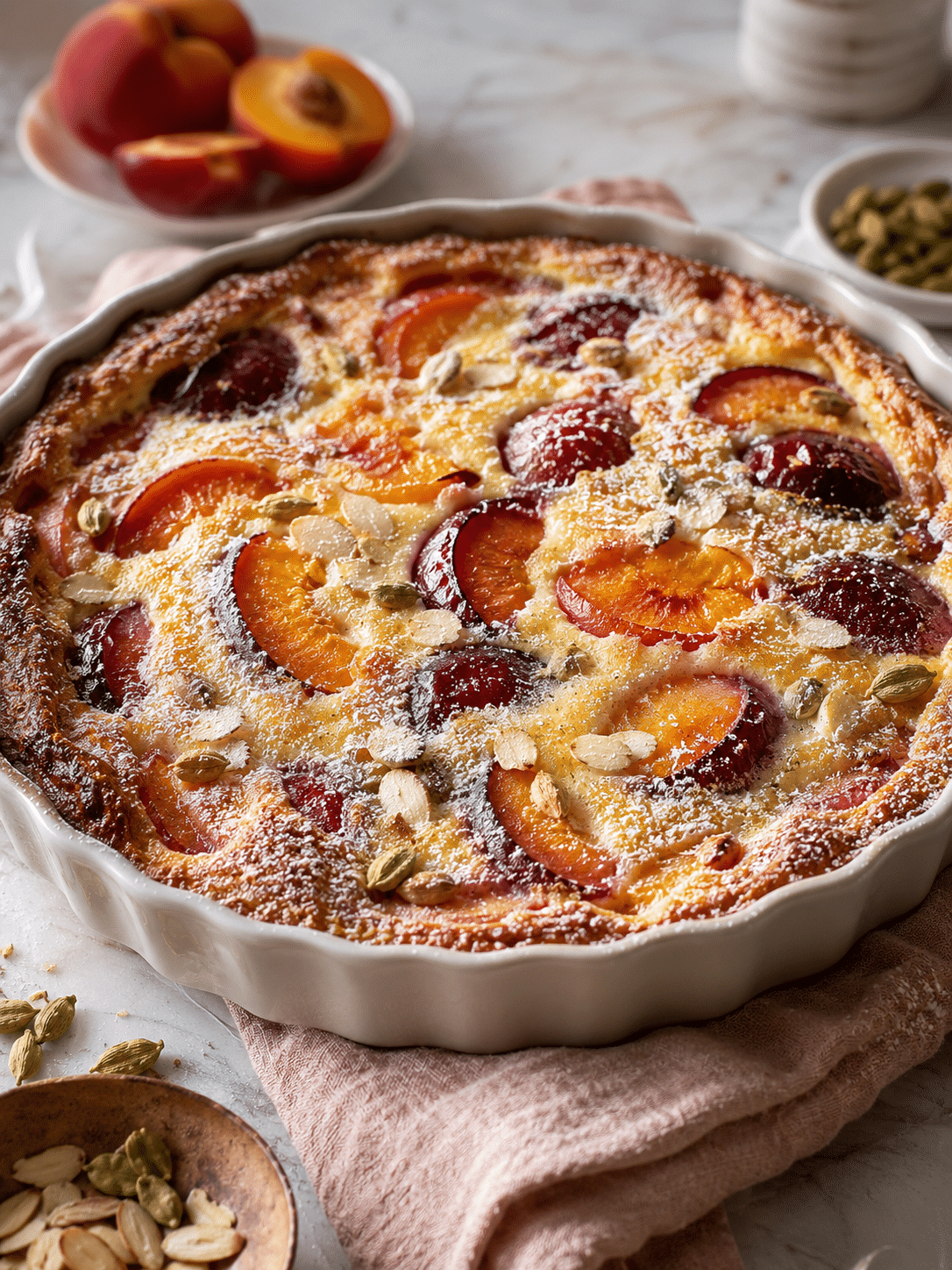
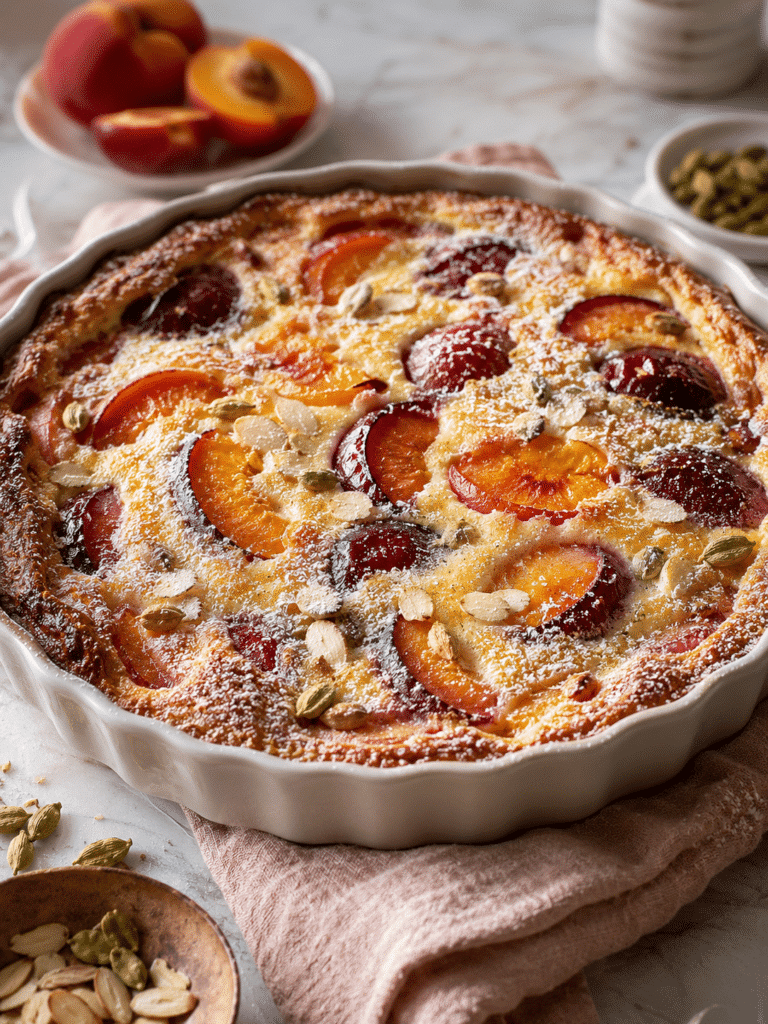
Cardamom and Stone Fruit Clafoutis is a tender French-style baked custard filled with juicy peaches, plums, apricots, or nectarines. The fruit softens, the batter sets like a delicate pancake-custard, and cardamom adds a warm floral note that makes every spoonful taste special.
The first time I made Cardamom and Stone Fruit Clafoutis for Cheflora Recipes, I had a bowl of peaches on the counter that were just soft enough to perfume the kitchen. You know that moment when fruit is too good to ignore, but you don’t want to fuss with pie dough? That’s exactly where this dessert shines. The batter comes together in a blender, the fruit goes straight into a buttered baking dish, and the oven does the quiet work.
In my kitchen, I’ve found that Cardamom and Stone Fruit Clafoutis feels fancy without asking you to act fancy. It has that golden, puffed edge that makes everyone lean in when it comes out of the oven, but the method stays friendly. You whisk eggs, milk, flour, sugar, vanilla, and cardamom until smooth. Then you pour it around sweet slices of stone fruit and bake until the center sets and the edges turn lightly bronzed.
A classic clafoutis usually points back to cherries, but summer stone fruit gives the dessert a soft, sunny twist. If you love peach desserts like my gluten-free peach crisp, this Cardamom and Stone Fruit Clafoutis will feel familiar, only silkier and more custardy. The fruit almost melts into the batter, and the cardamom keeps the sweetness from feeling flat.
After making this dozens of times, I’ve learned one thing: don’t overthink the fruit. Peaches bring honeyed juice, plums bring tang, nectarines stay bright and firm, and apricots add a gentle tartness. Together, they make Cardamom and Stone Fruit Clafoutis colorful enough for brunch and comforting enough for a quiet evening dessert.
One reader, Marissa from Oregon, told me, “I made this after dinner with two peaches and a plum, and everyone thought I’d planned it all day.” That’s the charm. Cardamom and Stone Fruit Clafoutis looks like a bakery dessert, but it’s really a home-cook recipe at heart. It rewards ripe fruit, a hot oven, and a little patience while the custard settles.
Table of Contents
What Are the Key Takeaways for This Recipe?
- Cardamom and Stone Fruit Clafoutis works best with ripe but not mushy peaches, plums, nectarines, apricots, or cherries.
- The batter should be smooth, thin, and pourable, almost like crepe batter.
- A buttered dish and a short rest after baking help the custard slice cleanly.
- Freshly ground cardamom gives the best aroma, but good ground cardamom works well too.
- Serve it warm, room temperature, or chilled, depending on the meal.
- Cardamom and Stone Fruit Clafoutis needs simple pantry staples, so it’s perfect when summer fruit is ready now.
What Is Cardamom and Stone Fruit Clafoutis?
Cardamom and Stone Fruit Clafoutis is a baked custard dessert made by pouring a light egg batter over sliced stone fruit. It bakes into a soft, spoonable dessert with golden edges, juicy fruit pockets, and a warm spice note from cardamom.
What Does Stone Fruit Mean in This Recipe?
Let’s start with the stone fruit definition, because it helps you choose the best fruit for Cardamom and Stone Fruit Clafoutis. A stone fruit is a fruit with soft flesh around one hard center pit, or “stone.” Peaches, nectarines, plums, apricots, and cherries all belong on a practical stone fruit list for baking. In the kitchen, that matters because these fruits hold their shape just enough while releasing syrupy juices into the custard.
When people search stone fruit wikipedia or stone fruit crossword, they’re often looking for the same basic idea: fruit with a pit. The cooking answer is easier. Pick fruit that smells sweet, gives slightly when pressed, and has a little acidity to balance the custard. For a botanical note, a stone fruit is often called a drupe, and Wikipedia describes clafoutis as a French baked dessert traditionally made with black cherries. That tradition matters, but Cardamom and Stone Fruit Clafoutis gives you room to use what’s ripest on the counter.
I like a mix because each fruit brings something different. Peaches make Cardamom and Stone Fruit Clafoutis lush and fragrant. Plums add ruby streaks and a bright bite. Apricots give the custard a jammy edge. Nectarines keep the slices neat. Cherries lean closer to the French original and pair beautifully with cardamom. If you’ve made my peach pecan oat crumble bars, you already know how well peaches behave when baked with warm flavors.
Why Does Cardamom Work So Well With Stone Fruit?
Cardamom is floral, citrusy, warm, and a little peppery. That sounds like a lot, but in Cardamom and Stone Fruit Clafoutis, it plays gently. It doesn’t cover the fruit. It lifts the peaches, plums, and apricots so they taste brighter. In my kitchen, I use just enough cardamom to make people ask, “What’s that lovely flavor?” without making the dessert taste like spice cake.
The custard base matters too. Eggs give structure, milk gives tenderness, flour gives a soft body, and sugar helps the top brown. Cardamom and Stone Fruit Clafoutis should never taste heavy. It should sit somewhere between a Dutch baby, a flan, and a soft pancake. That’s why the batter stays thin. A thick batter would hide the fruit, and this dessert should let the fruit shine.
For stone fruit benefits, keep the claim simple and honest. Stone fruit adds color, natural sweetness, and fruit to the table, and MyPlate’s fruit guidance includes fruit as part of a healthy eating pattern. Cardamom and Stone Fruit Clafoutis is still dessert, of course, but it’s a fruit-forward one that doesn’t need a mountain of frosting or a complicated topping.
| Fruit | Flavor in Clafoutis | Best Use |
|---|---|---|
| Peaches | Sweet, juicy, fragrant | Soft summer flavor |
| Plums | Tart, colorful, jammy | Balance and color |
| Apricots | Bright, tender, tangy | Fresh acidity |
| Nectarines | Sweet, firm, clean | Neat slices |
| Cherries | Classic, juicy, deep | Traditional feel |
What Ingredients Do You Need for Cardamom and Stone Fruit Clafoutis?
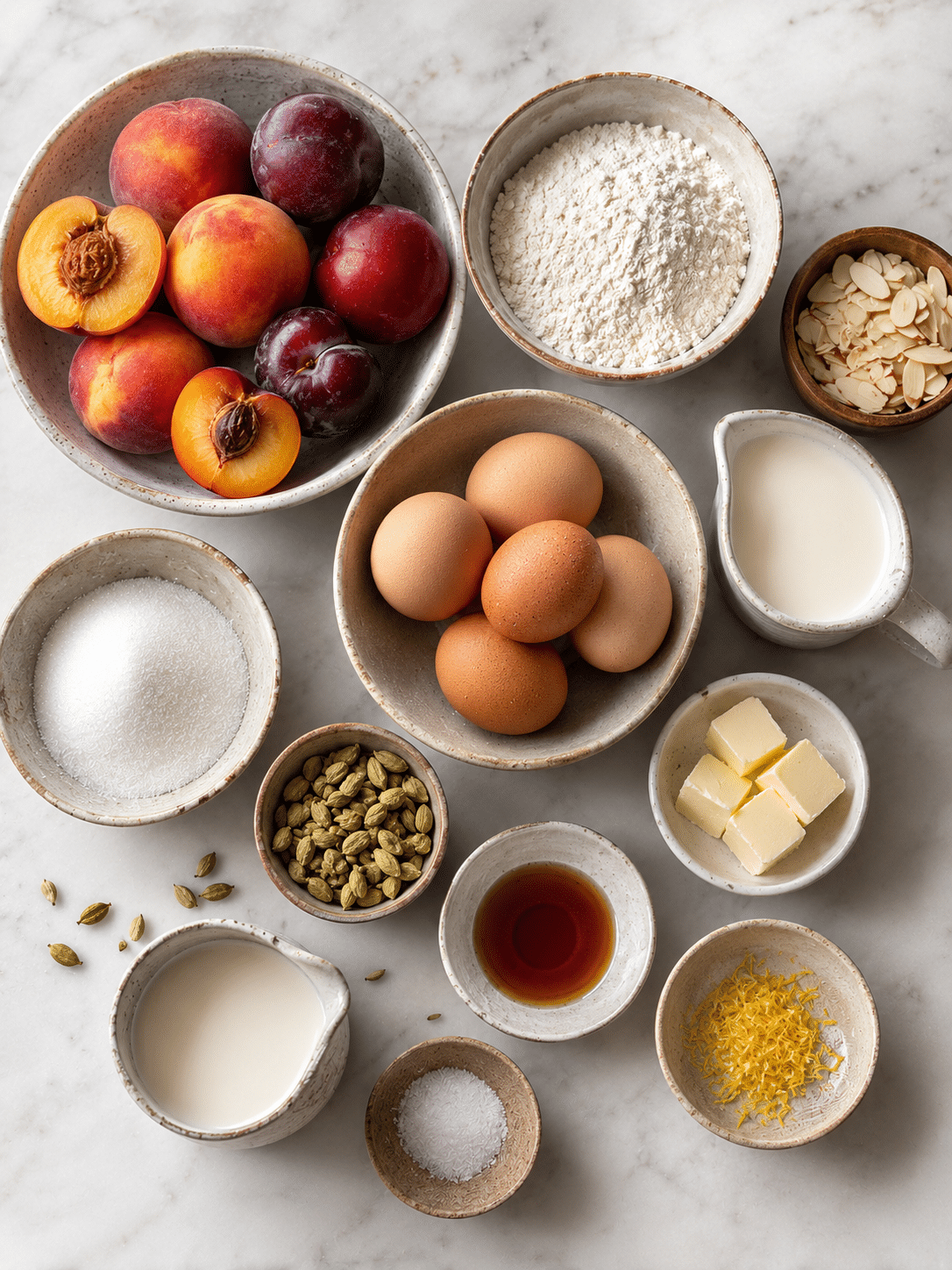
Cardamom and Stone Fruit Clafoutis needs eggs, milk, flour, sugar, vanilla, cardamom, salt, butter, and ripe stone fruit. The ingredients stay simple, but the balance matters: enough egg to set the custard, enough fruit for juiciness, and enough spice to perfume every slice.
Which Ingredients Make the Custard Tender?
For one 9-inch baking dish of Cardamom and Stone Fruit Clafoutis, I use 3 large eggs, 1 cup whole milk, 1/2 cup all-purpose flour, 1/3 cup sugar, 2 tablespoons melted butter, 1 teaspoon vanilla, 1/2 teaspoon ground cardamom, and a small pinch of salt. That gives you a custard that sets without turning rubbery. Whole milk keeps the texture soft, while eggs give the dessert its signature gentle structure.
You can blend the batter for the smoothest result. A blender breaks up flour lumps fast, and it adds a little air that helps the edges puff. A whisk works too, but give it a full minute and scrape the bowl well. When I make Cardamom and Stone Fruit Clafoutis for brunch, I mix the batter first and let it sit while I slice the fruit. That short rest helps the flour hydrate, and the baked texture comes out smoother.
The fruit should be ripe, not falling apart. If it’s too soft, the dessert may turn watery. If it’s rock hard, the fruit won’t soften enough before the custard sets. I love using 2 cups sliced fruit for Cardamom and Stone Fruit Clafoutis. A little more is fine, but don’t pack the dish too tightly or the batter won’t settle around the slices. For another peach dessert with a more pastry-style finish, my peach and raspberry tart is a bright companion recipe.
Can You Swap the Fruit or the Dairy?
You can absolutely adjust Cardamom and Stone Fruit Clafoutis based on what you have. Peaches and plums make a balanced mix. Nectarines and cherries feel elegant. Apricots and peaches taste sunny and a little tangy. Frozen fruit can work, but thaw it first and pat it dry. Too much extra liquid can keep the custard from setting cleanly.
For dairy, whole milk gives the best everyday result. Half-and-half makes Cardamom and Stone Fruit Clafoutis richer, while 2% milk works in a pinch. I don’t recommend skim milk because the dessert can taste thin. For flour, all-purpose flour is classic, but a trusted cup-for-cup gluten-free baking flour can work if it contains a binder. The texture may be a little softer, but the flavor will still be lovely.
Here’s the ingredient plan I use most often:
| Ingredient | Amount | Kitchen Note |
|---|---|---|
| Mixed stone fruit | 2 cups sliced | Peaches, plums, nectarines, apricots, cherries |
| Large eggs | 3 | Room temperature blends more smoothly |
| Whole milk | 1 cup | Gives a tender custard |
| All-purpose flour | 1/2 cup | Spoon and level it |
| Granulated sugar | 1/3 cup | Add 1 tablespoon more for tart plums |
| Melted butter | 2 tablespoons | Plus more for the dish |
| Vanilla extract | 1 teaspoon | Rounds out the spice |
| Ground cardamom | 1/2 teaspoon | Fresh is best |
| Fine salt | 1/8 teaspoon | Keeps flavor balanced |
| Powdered sugar | Optional | For serving |
A second reader, Jonah from North Carolina, wrote, “I used nectarines and cherries, and the cardamom made it taste like something from a small café.” That’s exactly the spirit of Cardamom and Stone Fruit Clafoutis: simple ingredients, café-level comfort.
Cardamom and Stone Fruit Clafoutis
Equipment
- 9-inch pie dish or shallow baking dish
- Blender
- mixing tools
- oven
Ingredients
- Unsalted butter, softened, for greasing the dish
- 2 cups Mixed stone fruit, sliced
- 3 Large eggs
- 1 cup Whole milk
- 1/2 cup All-purpose flour
- 1/3 cup Granulated sugar
- 2 tablespoons Unsalted butter, melted
- 1 teaspoon Vanilla extract
- 1/2 teaspoon Ground cardamom
- 1/8 teaspoon Fine salt
- Powdered sugar, optional, for serving
Instructions
- Preheat the oven to 350°F. Butter a 9-inch pie dish or shallow baking dish.
- Arrange the sliced stone fruit evenly in the bottom of the prepared dish.
- Add the eggs, milk, flour, sugar, melted butter, vanilla, cardamom, and salt to a blender. Blend for 20–30 seconds, until smooth.
- Let the batter rest for 5–10 minutes, then pour it gently over the fruit.
- Bake for 35–45 minutes, until the edges puff, the top turns lightly golden, and the center sets without sloshing.
- Let the clafoutis rest for 15 minutes before serving.
- Dust with powdered sugar, slice, and serve warm, room temperature, or chilled.
Notes
Nutrition
How Do You Bake Cardamom and Stone Fruit Clafoutis Without Drying It Out?
What Steps Give You the Best Texture?
Start by heating the oven to 350°F. Butter a 9-inch pie dish, ceramic baking dish, or shallow skillet. Don’t skip the butter. It helps the edges release and gives Cardamom and Stone Fruit Clafoutis that rich, golden rim everyone wants. Scatter the sliced fruit in the dish in a single relaxed layer. It doesn’t need to look perfect. In fact, a casual fruit pattern often looks prettier after baking.
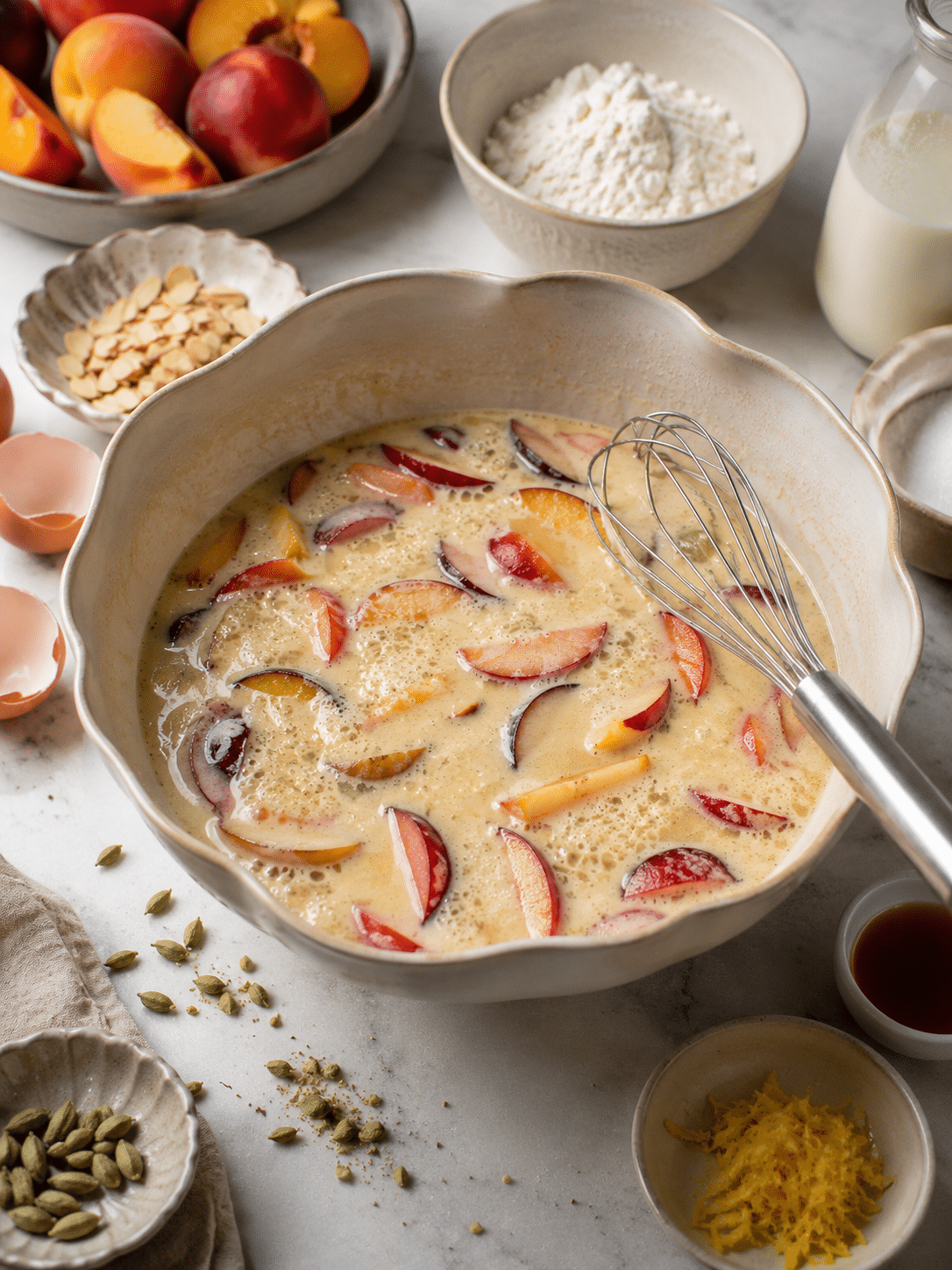
Next, make the batter. Add eggs, milk, flour, sugar, melted butter, vanilla, cardamom, and salt to a blender. Blend until smooth, about 20 to 30 seconds. Let the batter rest for 5 to 10 minutes while the oven finishes heating. Pour the batter gently over the fruit. Some slices will float a bit, and that’s fine. Cardamom and Stone Fruit Clafoutis should look rustic before it bakes.
Bake for 35 to 45 minutes, depending on your dish. A shallow metal skillet may bake faster, while ceramic may take a little longer. The dessert is ready when the edges puff and turn golden, the center no longer sloshes, and a knife inserted near the middle comes out mostly clean. A slight custardy softness is good. A wet pool in the center means it needs more time.
Let Cardamom and Stone Fruit Clafoutis rest for at least 15 minutes before serving. It will settle as it cools, and that’s normal. The puffed edges relax, the custard firms, and the fruit juices thicken into the batter. If you like fruit desserts with ginger warmth, my peach tarts with ginger and coconut bring a similar sunny feeling with a different texture.
What Mistakes Should You Avoid?
The biggest mistake with Cardamom and Stone Fruit Clafoutis is overbaking. Custard keeps cooking from residual heat after it leaves the oven, so pull it when the center is set but still tender. If the top looks deeply brown and the center feels firm like cake, it has gone too far. It will still taste good, but you’ll lose that creamy middle.
The second mistake is using fruit that’s too wet. Very ripe peaches can be wonderful, but if they drip juice all over the cutting board, pat the slices dry before adding them. Plums can also release a lot of liquid. I sometimes toss extra-juicy fruit with 1 teaspoon of flour before it goes into the dish. That tiny step helps Cardamom and Stone Fruit Clafoutis set cleanly without making the filling pasty.
The third mistake is adding too much cardamom. I love cardamom, but it has a strong personality. Start with 1/2 teaspoon. If your cardamom has been sitting in the pantry for a year, it may taste mild, so smell it first. It should smell bright and warm right away. If it smells dusty, replace it before making Cardamom and Stone Fruit Clafoutis.
One funny note: search terms like stone fruit dst and stone fruit crossword sometimes bring people here for reasons beyond cooking. In this recipe, we’re staying in the kitchen. The “stone” is the pit, the “fruit” is the juicy part, and the goal is a custard that tastes like summer under a spoon.
How Do You Serve and Store Cardamom and Stone Fruit Clafoutis?
Should You Serve It Warm, Chilled, or Room Temperature?
Cardamom and Stone Fruit Clafoutis tastes best warm or at room temperature, especially within the first few hours after baking. Warm, it feels soft and pudding-like. Room temperature, it slices more neatly and the fruit flavor comes forward. Chilled, it becomes firmer and almost flan-like, which some people love for breakfast the next day.
For serving, I keep it simple. Dust the top with powdered sugar, add a spoonful of lightly whipped cream, or serve it plain with coffee. The dessert already has fruit, custard, and spice, so it doesn’t need much. If I’m making Cardamom and Stone Fruit Clafoutis for a summer lunch, I’ll add a bowl of fresh berries on the table and let everyone help themselves.
A scoop of vanilla ice cream works beautifully, especially with plums or peaches. If you want to stay on the peach path for a full summer menu, serve smaller portions of this clafoutis after peach iced tea pound cake trifles at a party, or save the trifles for another weekend when you want something layered and chilled.
Decorative stone fruit can make the presentation feel thoughtful without extra work. I’ll place a few fresh peach wedges, tiny apricots, or whole cherries near the serving dish, especially when the clafoutis sits on a brunch table. The fresh fruit tells everyone what’s inside before the first slice comes out. Cardamom and Stone Fruit Clafoutis already looks charming, but that little styling touch makes the table feel cared for.
How Long Does It Keep?
Store Cardamom and Stone Fruit Clafoutis covered in the refrigerator for up to 3 days. Because it contains eggs and milk, don’t leave it sitting out all afternoon. Let it cool, cover it, and chill it. The texture firms as it rests, but the flavor stays gentle and comforting.
To reheat, use a low oven, around 300°F, until just warmed through. The microwave works for single servings, but go gently. Ten to fifteen seconds at a time is enough. Too much heat can toughen the custard. I often eat leftover Cardamom and Stone Fruit Clafoutis cold with coffee, and honestly, it’s a quiet little breakfast treat.
Freezing isn’t my favorite choice. Custards can turn watery after thawing, and the fruit texture changes. If you need to plan ahead, make the batter a few hours early and keep it covered in the fridge. Slice the fruit close to baking time so it stays fresh. Give the batter a quick whisk or blend before pouring it into the dish.
For another fruit-forward dessert that stores differently, my summer peach and tahini tart has a firmer base and nutty flavor. Cardamom and Stone Fruit Clafoutis leans softer, more spoonable, and more custardy, which is why I treat it as a same-day dessert whenever possible.
How Can You Change Cardamom and Stone Fruit Clafoutis for Different Seasons?
Which Flavor Twists Work Best?
Once you understand the base, Cardamom and Stone Fruit Clafoutis becomes easy to change. Add lemon zest for brightness. Add almond extract, but only a tiny splash, if you want a bakery-style flavor. Swap vanilla for orange blossom water when you’re using apricots. Sprinkle sliced almonds on top during the last 10 minutes of baking for a little crunch.
You can also lean into one fruit. All-peach Cardamom and Stone Fruit Clafoutis tastes mellow and sweet. Plum-heavy clafoutis tastes tart and vivid. Cherry and nectarine together feel close to classic but still fresh. If you love old-fashioned peach desserts, my peach melba gives you another way to pair peaches with bright fruit flavor.
Cardamom also plays well with honey, pistachios, rose, orange, and brown butter. For a deeper version, brown the butter before adding it to the batter. Let it cool slightly so it doesn’t scramble the eggs. Brown butter gives Cardamom and Stone Fruit Clafoutis a nutty aroma that works especially well with plums and nectarines.
You can make this dessert feel more brunch-friendly by reducing the sugar slightly and serving it with yogurt. For dessert, keep the full sugar amount and add whipped cream or ice cream. Cardamom and Stone Fruit Clafoutis doesn’t need a sauce, but a spoonful of warm peach jam loosened with lemon juice can be lovely over each serving.
Who Is This Recipe Best For?
Cardamom and Stone Fruit Clafoutis is best for home cooks who want a dessert that feels special but doesn’t demand pastry skills. It’s also great for anyone with ripe fruit that needs a plan. You don’t need a mixer, rolling pin, or tart pan. You just need a dish, a bowl or blender, and enough fruit to cover the bottom.
This recipe also works for people who like desserts that aren’t too sweet. The custard has sugar, but the fruit leads. If you’re serving guests who say they “don’t love dessert,” Cardamom and Stone Fruit Clafoutis often wins them over because it lands softly. It’s sweet, but not loud. It’s rich, but not heavy.
For kids and families, slice the fruit thinly and keep the cardamom gentle. For adults, add a touch more spice and serve with coffee or tea. When I make this for Cheflora Recipes readers, I want it to feel doable on a weeknight and pretty enough for Sunday lunch. That balance matters.
If you’re on a peach streak, pair this recipe with peach ice cream for the most summery plate, or serve it after sweet biscuits with roasted peaches another day when you want a biscuit-style dessert. Cardamom and Stone Fruit Clafoutis belongs right in that family of warm, fruit-first recipes that make the kitchen smell like someone cared.
How Do You Make the Full Cardamom and Stone Fruit Clafoutis Recipe?
Ingredients
| Ingredient | Amount |
|---|---|
| Unsalted butter, softened | For greasing the dish |
| Sliced mixed stone fruit | 2 cups |
| Large eggs | 3 |
| Whole milk | 1 cup |
| All-purpose flour | 1/2 cup |
| Granulated sugar | 1/3 cup |
| Melted unsalted butter | 2 tablespoons |
| Vanilla extract | 1 teaspoon |
| Ground cardamom | 1/2 teaspoon |
| Fine salt | 1/8 teaspoon |
| Powdered sugar | Optional, for serving |
Directions
Heat the oven to 350°F. Butter a 9-inch pie dish or shallow baking dish well. Arrange the sliced stone fruit across the bottom in a loose, even layer.
Add the eggs, milk, flour, sugar, melted butter, vanilla, cardamom, and salt to a blender. Blend until smooth, about 20 to 30 seconds. Let the batter rest for 5 to 10 minutes.
Pour the batter over the fruit. Bake for 35 to 45 minutes, until the edges puff, the top turns lightly golden, and the center sets without sloshing.
Let Cardamom and Stone Fruit Clafoutis cool for at least 15 minutes. Dust with powdered sugar and serve warm, room temperature, or chilled.
FAQ
What fruit pairs best with cardamom?
The fruit that pairs best with cardamom includes peaches, plums, apricots, nectarines, cherries, pears, oranges, and berries. For Cardamom and Stone Fruit Clafoutis, peaches may be the easiest match because their honeyed sweetness softens cardamom’s floral warmth. Plums bring more tang, which keeps the custard lively. Apricots add a sunny tartness that makes the spice feel bright instead of heavy. Cherries taste deeper and more classic. In my kitchen, the best pairing is usually a mix of peach and plum because you get sweetness, color, and balance in every bite. Cardamom should support the fruit, not take over, so start with a modest amount and let the ripe fruit lead.
What fruit is traditionally used in a clafoutis?
Traditional clafoutis is most closely tied to black cherries. The classic French version bakes cherries in a simple egg, milk, flour, and sugar batter until the dessert sets into a soft custard. Some traditional recipes leave the cherry pits in because they can add a subtle almond-like aroma, but many home cooks pit the cherries for easier eating. Cardamom and Stone Fruit Clafoutis takes inspiration from that traditional method but uses summer stone fruit like peaches, plums, apricots, and nectarines. The heart of the recipe stays the same: fruit on the bottom, thin custard batter poured over, and a gentle bake until the edges puff and the center turns tender.
What stone fruit is used to make clafoutis?
Cherries are the most traditional stone fruit used to make clafoutis, but many stone fruits work beautifully. Peaches, nectarines, plums, and apricots all bake well in custard because they soften without fully disappearing. For Cardamom and Stone Fruit Clafoutis, I like using a mix of two or three fruits. Peaches add sweetness, plums add color and tartness, and apricots bring a jammy edge. Nectarines are helpful when you want clean slices that hold their shape. The best stone fruit for clafoutis should feel ripe but not mushy. When fruit tastes good raw, it usually tastes even better after baking in a warm cardamom custard.
What does clafoutis mean in French?
Clafoutis is a French dessert name often linked to the idea of filling a dish, which makes sense because fruit fills the baking dish before custard batter gets poured over it. In everyday cooking terms, clafoutis means a rustic baked fruit custard, usually made with cherries in its traditional form. Cardamom and Stone Fruit Clafoutis follows that same filled-dish idea but swaps in peaches, plums, nectarines, or apricots and adds cardamom for warmth. The word may sound fancy, but the recipe is humble and homey. You arrange fruit, pour batter, bake, rest, and serve. That simplicity is why clafoutis has stayed so loved.
Conclusion: Why Should You Bake Cardamom and Stone Fruit Clafoutis Soon?
Cardamom and Stone Fruit Clafoutis is the kind of dessert that reminds you good baking doesn’t have to be complicated. It starts with ripe fruit, pantry staples, and a spice that makes the whole kitchen smell warm and inviting. The batter blends in moments, the fruit does most of the flavor work, and the finished dessert lands somewhere between custard, pancake, and fruit pudding.
What I love most is how flexible it feels. You can make Cardamom and Stone Fruit Clafoutis with peaches when they’re soft and fragrant, plums when you want color, cherries when you want tradition, or apricots when you want a little tang. You can serve it warm at the table or sneak a chilled spoonful the next morning. Either way, it feels personal.
Chef Lora and Cheflora Recipes are all about recipes that feel generous without making your day harder, and this one fits that promise. Bake it when your fruit bowl looks ready, dust it with powdered sugar, and bring it to the table with confidence. Try Cardamom and Stone Fruit Clafoutis while stone fruit is at its sweetest.