Post Disclaimer
Disclaimer: This content is for educational purposes only, not medical advice. Always consult with a doctor before making significant changes to your diet, especially if you have pre-existing health conditions.
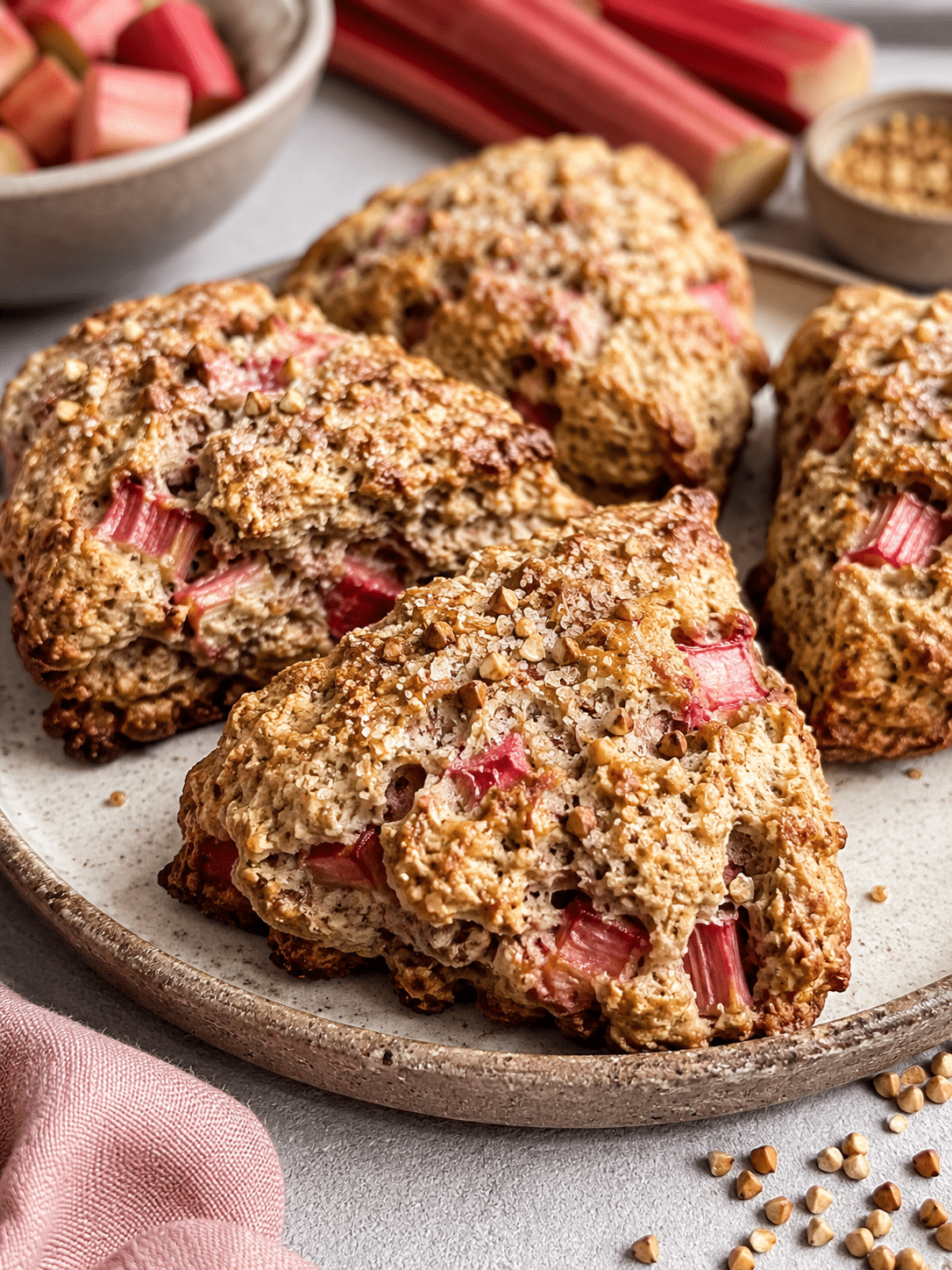
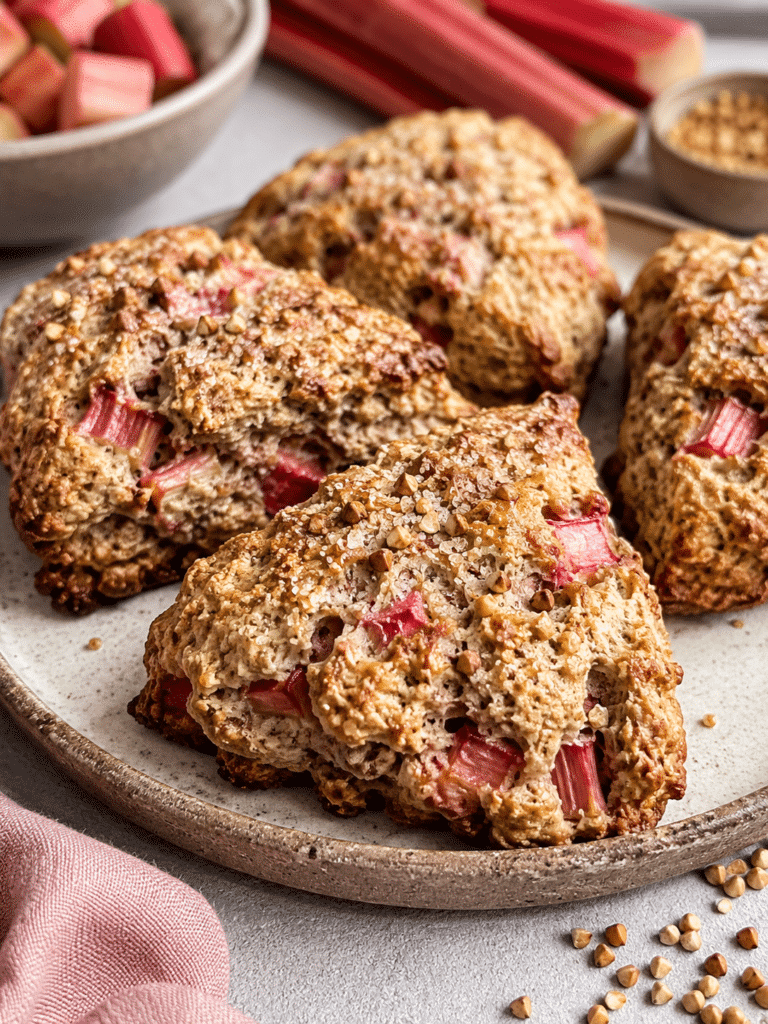
Rhubarb-Buckwheat Scones are tender, tangy bakery-style scones made with nutty buckwheat flour, cold butter, buttermilk, and fresh rhubarb. They bake with crisp edges, soft centers, and a bright pink bite that makes breakfast, brunch, or afternoon tea feel special without much fuss.
The first time I baked Rhubarb-Buckwheat Scones, I had a bundle of rhubarb on the counter that looked almost too pretty to cut. The stalks were ruby red at the ends, pale green through the middle, and sharp enough to make my mouth water before I even turned on the oven. In my kitchen, rhubarb always feels like the official start of brighter baking. It’s not sugary on its own. It doesn’t try to be soft or mild. It brings a clean tartness that wakes up butter, flour, cream, and fruit in the best way.
These Rhubarb-Buckwheat Scones came from one of those mornings when I wanted something hearty but still tender. Plain all-purpose flour would’ve made a fine scone, but buckwheat gives the dough a deeper flavor. It’s earthy, a little toasted, and cozy without being heavy. Buckwheat isn’t actually wheat; Wikipedia describes buckwheat as a pseudocereal, which helps explain why its flavor feels different from regular baking flour. That small swap turns a simple rhubarb scone recipe into something that tastes like it came from a small countryside bakery.
After making this dozens of times, I’ve found that the real trick is balance. Rhubarb brings tartness, buckwheat brings nuttiness, butter brings richness, and buttermilk ties everything together with a soft crumb. That’s why these Rhubarb-Buckwheat Scones don’t taste flat or dry. They taste layered. A bite starts crisp on the outside, then turns soft and buttery, then finishes with a tangy rhubarb pop. If you’ve tried my rhubarb shortbread bars, you already know how much I love pairing rhubarb with buttery dough.
This recipe also sits right between rustic and special. You don’t need perfect pastry skills. You don’t need fancy tools. You just need cold butter, a light hand, and enough patience to chill the dough before baking. These Rhubarb-Buckwheat Scones are the kind of thing I’d serve for Mother’s Day brunch, a weekend breakfast, or a quiet afternoon with hot coffee. They’re also lovely next to something creamy and bright, much like the way rhubarb shines in pavlova with rhubarb and pistachios.
When readers ask for the best rhubarb scones, I always point them toward a recipe with enough fat, enough acid, and enough structure. Dry scones usually come from warm butter, too much mixing, or too much flour. These Rhubarb-Buckwheat Scones fix that with cubed cold butter, buttermilk, and a dough that’s patted instead of kneaded. The result feels homey, but it still gives you that bakery-style split down the middle when you pull one apart.
Table of Contents
Key Takeaways
- Rhubarb-Buckwheat Scones taste tart, nutty, buttery, and tender, with crisp golden edges and soft centers.
- Buckwheat flour gives these scones deeper flavor, while all-purpose flour keeps the dough light enough for a classic crumb.
- Fresh rhubarb works best, but frozen rhubarb can work when you keep it cold and don’t thaw it first.
- Buttermilk adds tenderness and a gentle tang, making this one of my favorite rhubarb scones with buttermilk.
- Cold butter matters. Warm butter melts too early and gives you flatter, tougher scones.
- You can turn this dough into strawberry rhubarb scones, rhubarb ginger scones, or rustic rhubarb drop scones with small changes.
- These Rhubarb-Buckwheat Scones freeze well before or after baking, so they’re easy to make ahead.
What Makes Rhubarb-Buckwheat Scones Taste So Good?
Rhubarb-Buckwheat Scones taste so good because they balance tart rhubarb, nutty buckwheat, rich butter, and tangy buttermilk in one tender dough. The fruit keeps each bite bright, while the buckwheat gives the scones a warm, toasted flavor that plain flour alone can’t bring.
Why does rhubarb work so well in scones?
Rhubarb is one of my favorite baking ingredients because it stays bold even after time in the oven. In Rhubarb-Buckwheat Scones, the small pieces soften just enough to become jammy at the edges, but they don’t disappear into the dough. That’s important. A good rhubarb scone recipe should give you pockets of tart fruit, not a wet pink smear. The USDA’s FoodData Central database includes raw rhubarb among its food entries, and it’s a stalk that brings tart flavor without needing much to stand out; you can check the database through USDA FoodData Central.
For the best rhubarb scones, cut the stalks into small pieces, about the size of peas or small blueberries. Big chunks can leave wet spots, while tiny bits spread flavor through the dough. I don’t peel rhubarb unless the outside feels stringy. That color is part of the joy, especially in Rhubarb-Buckwheat Scones, where the pink pieces look beautiful against the darker buckwheat crumb. When I have extra stalks, I’ll often simmer them into rhubarb sauce and spoon it over warm scones.
Why use buckwheat flour instead of only all-purpose flour?
Buckwheat flour gives Rhubarb-Buckwheat Scones their signature flavor. It tastes warm, earthy, and faintly toasted, which makes the rhubarb taste even brighter. I don’t use all buckwheat flour here because that can make scones dense. Instead, I use a mix of buckwheat and all-purpose flour. That gives you the flavor of buckwheat with the lift and tenderness of a classic scone. It’s the same kind of smart balance I like in cozy bakes such as rhubarb bread, where structure matters just as much as flavor.
These Rhubarb-Buckwheat Scones also have buttermilk, which brings a soft crumb and a gentle tang. Buttermilk is especially helpful when you’re baking with a stronger flour because it keeps the dough from tasting too heavy. If you’ve been searching for rhubarb scones with buttermilk, this version gives you that tender middle without making the scones cake-like. You still get flakes. You still get crumbly edges. You still get that little cloud of steam when you split one open.
What Ingredients Do You Need for Rhubarb-Buckwheat Scones?
What goes into the dough?
The ingredient list for Rhubarb-Buckwheat Scones is simple, but each item earns its place. Flour gives structure, buckwheat gives flavor, sugar softens the rhubarb’s edge, baking powder lifts the dough, salt sharpens everything, butter creates flakiness, and buttermilk brings tenderness. I also like a little vanilla because it rounds out the tart fruit. You can add lemon zest if you want a brighter scone, but don’t overdo it. Rhubarb already has plenty of personality.
| Ingredient | Amount | Why It Matters |
|---|---|---|
| All-purpose flour | 1 1/2 cups | Keeps the scones light and tender |
| Buckwheat flour | 3/4 cup | Adds nutty, toasted flavor |
| Granulated sugar | 1/3 cup | Balances tart rhubarb |
| Baking powder | 1 tablespoon | Helps the scones rise |
| Fine salt | 1/2 teaspoon | Sharpens the flavor |
| Cold unsalted butter | 1/2 cup, cubed | Creates flaky, rich crumbs |
| Fresh rhubarb | 1 cup, finely chopped | Adds tart fruit pockets |
| Buttermilk | 2/3 cup, cold | Makes the dough tender |
| Vanilla extract | 1 teaspoon | Adds warmth |
| Coarse sugar | 1 tablespoon | Gives a crisp top |
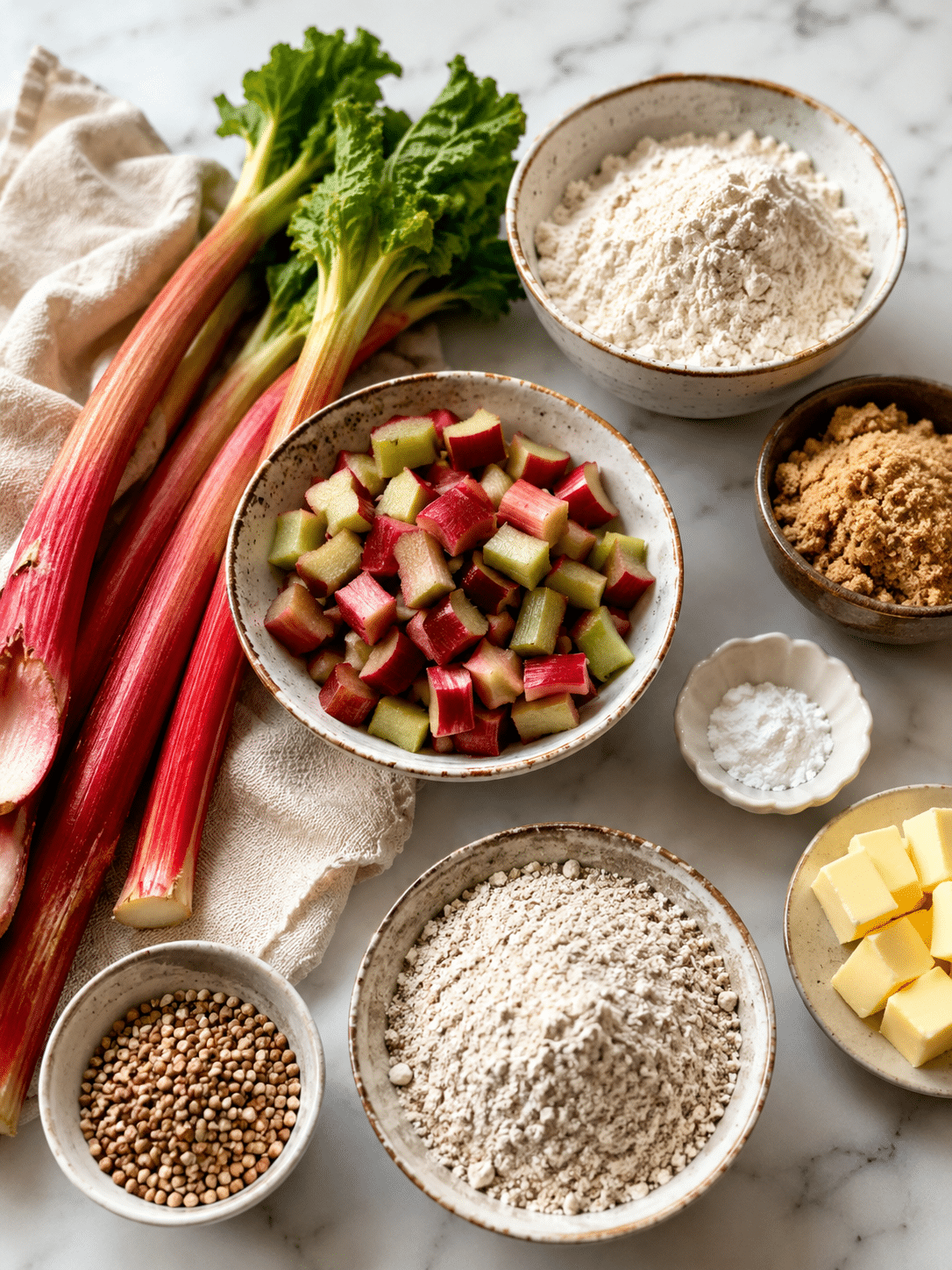
For Rhubarb-Buckwheat Scones, cold ingredients matter more than perfect shaping. Keep the butter in the fridge until you’re ready to cut it in. Chill the buttermilk too. If your kitchen runs warm, place the flour bowl in the fridge for 10 minutes before mixing. That small step helps the butter stay firm, and firm butter gives the scones their flaky lift. It’s the same care I use when baking fruit-forward treats like rhubarb raspberry cheesecake squares, where texture makes all the difference.
Can you swap ingredients?
You can adjust Rhubarb-Buckwheat Scones, but I’d keep the main balance the same. If you don’t have buttermilk, mix whole milk with a spoonful of lemon juice and let it sit for 5 minutes. It won’t be exactly the same, but it works. If you want strawberry rhubarb scones, replace 1/3 cup of the rhubarb with small diced strawberries. Keep the pieces small, because strawberries release more juice than rhubarb. Among strawberry and rhubarb scones recipes, the best ones use restraint so the dough doesn’t turn soggy.
For rhubarb ginger scones, add 1 teaspoon grated fresh ginger or 2 tablespoons finely chopped crystallized ginger. Ginger gives Rhubarb-Buckwheat Scones a warm bite that works beautifully with buckwheat. For rhubarb drop scones, skip patting the dough into a round and scoop mounds onto the baking sheet instead. They’ll look more rustic and bake a little faster. That version is great when you want the flavor of a classic rhubarb scone recipe but don’t feel like shaping wedges.
How Do You Make Rhubarb-Buckwheat Scones Step by Step?
To make Rhubarb-Buckwheat Scones, whisk the dry ingredients, cut in cold butter, fold in chopped rhubarb, stir in cold buttermilk, shape the dough gently, chill it, then bake until the tops are golden and the centers feel set. A light hand keeps them tender.
How do you mix the dough without making it tough?
When someone asks me how to make rhubarb scones, I always start with the same advice: don’t treat scone dough like bread dough. Rhubarb-Buckwheat Scones need gentle mixing. Whisk the flours, sugar, baking powder, and salt in a wide bowl. Add the cold butter cubes, then pinch and rub them into the flour until the mixture looks uneven. Some bits should be sandy, and some butter pieces should stay pea-sized. Those larger pieces melt in the oven and help create flaky pockets.
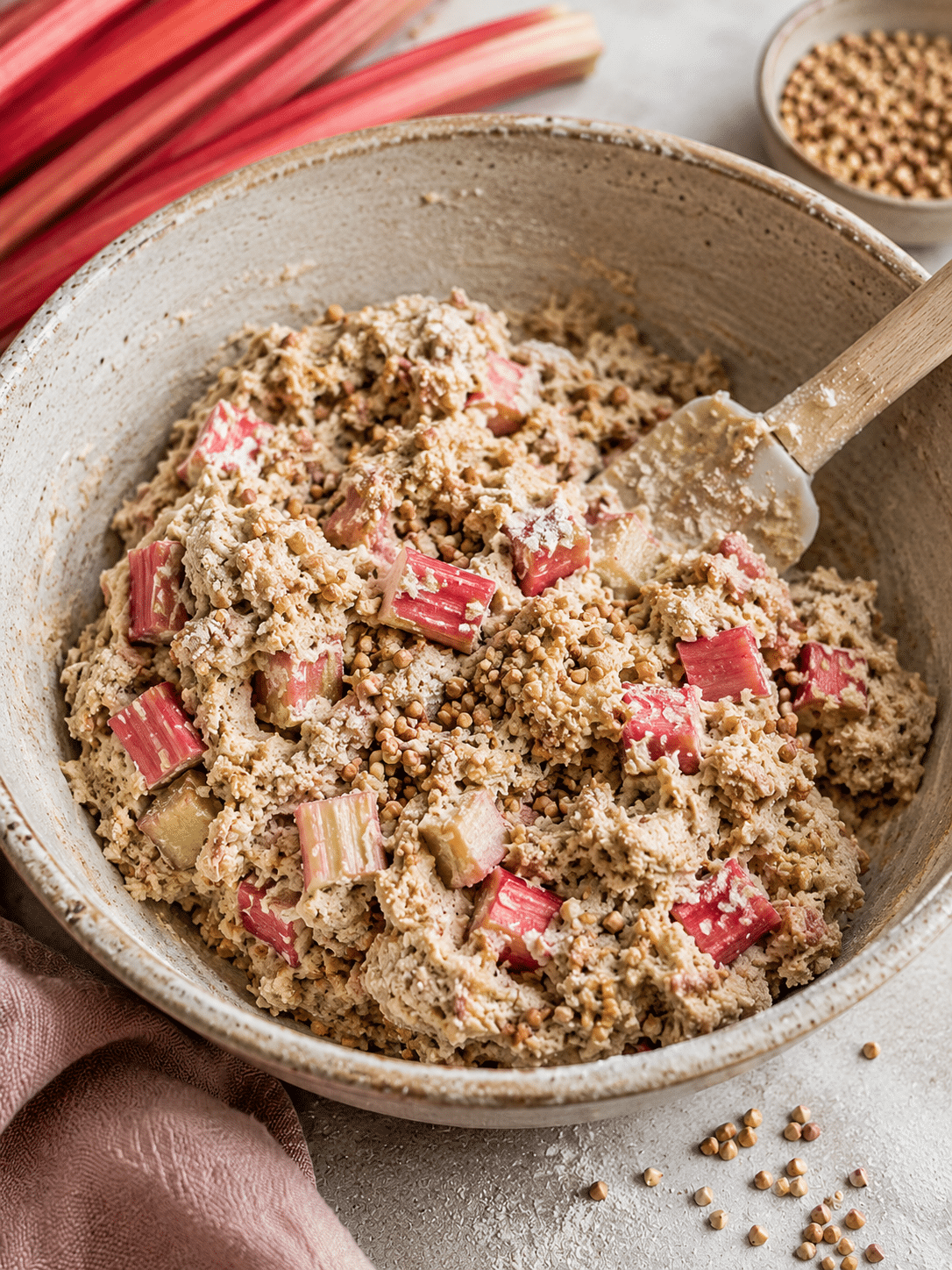
Stir in the chopped rhubarb before adding the buttermilk. This coats the fruit in flour and helps control moisture. Pour in the cold buttermilk and vanilla, then use a fork to pull the dough together. It should look shaggy, not smooth. If there are dry crumbs at the bottom, press them in with your hands. Don’t add too much liquid too early. Rhubarb-Buckwheat Scones should hold together when patted, but the dough shouldn’t feel sticky like muffin batter. If it does, dust your hands with flour and keep going gently.
How should you shape and bake them?
Turn the dough onto a lightly floured surface and pat it into a 7-inch round, about 1 inch thick. Cut it into 8 wedges with a sharp knife or bench scraper. For cleaner edges, press straight down instead of sawing. Place the wedges on a parchment-lined baking sheet, leaving space between them. Brush the tops with a little buttermilk and sprinkle with coarse sugar. Then chill the shaped Rhubarb-Buckwheat Scones for at least 20 minutes while the oven heats to 400°F.
Bake for 18 to 23 minutes, until the tops look golden, the bottoms feel firm, and the rhubarb edges bubble slightly. Let the scones rest on the pan for 5 minutes before moving them to a rack. Warm Rhubarb-Buckwheat Scones are delicate, so don’t rush them. I love serving them with butter, honey, or a spoonful of jam. For a brunch spread, they sit beautifully beside rhubarb buckle, especially when you want one hand-held bake and one spoonable dessert.
Rhubarb-Buckwheat Scones
Equipment
- Large mixing bowl
- measuring cups and spoons
- fork or pastry cutter
- baking sheet
- Parchment paper
- bench scraper or knife
Ingredients
- 1 1/2 cups all-purpose flour
- 3/4 cup buckwheat flour
- 1/3 cup granulated sugar
- 1 tbsp baking powder
- 1/2 tsp fine salt
- 1/2 cup cold unsalted butter, cubed
- 1 cup finely chopped fresh rhubarb
- 2/3 cup cold buttermilk, plus more for brushing
- 1 tsp vanilla extract
- 1 tbsp coarse sugar, for topping
Instructions
- Heat the oven to 400°F and line a baking sheet with parchment paper.
- Whisk the all-purpose flour, buckwheat flour, sugar, baking powder, and salt in a large bowl.
- Add cold butter and work it into the flour until the mixture has sandy bits and pea-sized butter pieces.
- Fold in the chopped rhubarb.
- Stir cold buttermilk and vanilla together, then pour into the flour mixture.
- Mix gently with a fork until a shaggy dough forms.
- Pat the dough into a 7-inch round and cut into 8 wedges.
- Place wedges on the baking sheet, brush with buttermilk, and sprinkle with coarse sugar.
- Chill for 20 minutes.
- Bake for 18 to 23 minutes, until golden and set.
- Cool for 5 minutes on the pan, then serve warm.
Notes
Nutrition
What Are the Best Tips for Tender Rhubarb-Buckwheat Scones?
Why do scones turn dry?
Dry scones usually come from too much flour, overmixing, or baking too long. Rhubarb-Buckwheat Scones are a little more forgiving because rhubarb brings moisture, but that doesn’t mean the dough can take rough handling. Spoon flour into the measuring cup and level it off instead of scooping straight from the bag. Scooping packs flour down and can add extra tablespoons without you noticing. That extra flour steals tenderness and makes even the best rhubarb scones feel heavy.
Another key is stopping before the dough looks perfect. A shaggy dough makes tender Rhubarb-Buckwheat Scones. A smooth dough often means you’ve mixed too much. In my kitchen, I’d rather see a few cracks on top than a tight, overworked crumb inside. The chill time also helps. It firms the butter, relaxes the flour, and gives the scones a better rise. While they chill, you can make coffee, set the table, or mix a bright drink like rhubarb fizz for a spring brunch.
How can you add more flavor without ruining the texture?
Flavor add-ins work best when they’re dry or used in small amounts. Lemon zest, orange zest, ginger, cardamom, and vanilla all work well in Rhubarb-Buckwheat Scones. Avoid adding too much fresh fruit beyond the rhubarb unless you reduce the rhubarb slightly. If you’re making strawberry rhubarb scones, dice the strawberries small and pat them dry. If you’re making rhubarb ginger scones, use either fresh ginger or crystallized ginger, not a heavy hand with both.
A simple glaze also works, but I usually keep Rhubarb-Buckwheat Scones lightly sugared on top. Buckwheat has a lovely rustic flavor, and too much icing can cover it. If you want a sweet finish, whisk powdered sugar with a small spoonful of buttermilk and a few drops of vanilla, then drizzle lightly after the scones cool. For a more dessert-like table, pair them with rosy rhubarb meringue cake. The meringue feels fancy, while the scones keep things grounded and cozy.
How Should You Serve, Store, and Change Rhubarb-Buckwheat Scones?
Rhubarb-Buckwheat Scones are best served warm the day they’re baked, but they also freeze well. Store cooled scones in an airtight container for up to two days, or freeze baked scones for longer storage and rewarm them until the edges crisp again.
What should you serve with them?
I like Rhubarb-Buckwheat Scones warm, split open, with salted butter melting into the crumb. Honey is lovely too, especially if your rhubarb is extra tart. For brunch, serve them with Greek yogurt, fresh berries, soft scrambled eggs, or a fruit salad. They also work as an afternoon treat with black tea or coffee. The buckwheat makes them feel satisfying without turning them into a heavy pastry.
For a spring menu, these Rhubarb-Buckwheat Scones pair nicely with creamy, nutty, and berry-forward rhubarb recipes. If you want another tender bake, try pistachio rhubarb yogurt cake alongside the scones. For a cool contrast, chilled rhubarb and raspberry soup makes a pretty starter before a brunch plate. And for an adult gathering, strawberry rhubarb sangria brings the same sweet-tart mood in a glass.
How do you store and freeze them?
Fresh Rhubarb-Buckwheat Scones taste best within a few hours of baking, but you can store them well. Let them cool fully, then place them in an airtight container at room temperature for up to 2 days. To rewarm, place them in a 325°F oven for 6 to 8 minutes. The oven brings back the crisp edges better than a microwave. A microwave softens them, which is fine in a pinch, but it won’t give you that bakery-style top.
To freeze unbaked Rhubarb-Buckwheat Scones, shape and cut the dough, freeze the wedges on a baking sheet, then move them to a freezer bag. Bake from frozen at 400°F, adding a few extra minutes. This is my favorite make-ahead trick because the scones go into the oven cold and rise beautifully. You can also freeze baked scones, then rewarm them straight from the freezer. That makes this rhubarb scone recipe a smart choice for busy mornings, brunch guests, or any day when you want something homemade without starting from scratch.
Recipe Card: Rhubarb-Buckwheat Scones
| Detail | Amount |
|---|---|
| Prep Time | 20 minutes |
| Chill Time | 20 minutes |
| Bake Time | 18 to 23 minutes |
| Total Time | About 1 hour |
| Yield | 8 scones |
| Oven Temperature | 400°F |
Ingredients
- 1 1/2 cups all-purpose flour
- 3/4 cup buckwheat flour
- 1/3 cup granulated sugar
- 1 tablespoon baking powder
- 1/2 teaspoon fine salt
- 1/2 cup cold unsalted butter, cubed
- 1 cup finely chopped fresh rhubarb
- 2/3 cup cold buttermilk, plus more for brushing
- 1 teaspoon vanilla extract
- 1 tablespoon coarse sugar, for topping
Instructions
- Heat the oven to 400°F and line a baking sheet with parchment paper.
- Whisk the all-purpose flour, buckwheat flour, sugar, baking powder, and salt in a large bowl.
- Add cold butter and work it into the flour until the mixture has sandy bits and pea-sized butter pieces.
- Fold in the chopped rhubarb.
- Stir cold buttermilk and vanilla together, then pour into the flour mixture.
- Mix gently with a fork until a shaggy dough forms.
- Pat the dough into a 7-inch round and cut into 8 wedges.
- Place wedges on the baking sheet, brush with buttermilk, and sprinkle with coarse sugar.
- Chill for 20 minutes.
- Bake for 18 to 23 minutes, until golden and set.
- Cool for 5 minutes on the pan, then serve warm.
FAQ
What is the secret to making the best rhubarb scones?
The secret to the best rhubarb scones is cold butter, small rhubarb pieces, and gentle mixing. For Rhubarb-Buckwheat Scones, I keep the butter firm until it goes into the oven because cold butter creates steam and helps the dough rise. I also cut rhubarb into small pieces so it softens without soaking the crumb. The dough should look shaggy, not smooth. Once you add buttermilk, mix only until it holds together. A short chill before baking gives the scones better shape, crisp edges, and a more tender center.
Can I use frozen rhubarb in Rhubarb-Buckwheat Scones?
Yes, you can use frozen rhubarb in Rhubarb-Buckwheat Scones, but don’t thaw it first. Thawed rhubarb releases too much liquid and can make the dough wet. Use frozen rhubarb straight from the freezer, and cut it small before freezing if possible. If the pieces look icy, pat them lightly with a towel before folding them into the flour mixture. You may need to add 2 or 3 extra minutes to the bake time. The flavor will still be tart and bright, though fresh rhubarb gives the cleanest texture.
Do you need to peel rhubarb before baking scones?
You usually don’t need to peel rhubarb before baking Rhubarb-Buckwheat Scones. The colorful skin softens in the oven and gives the scones pretty pink streaks. I only peel rhubarb if the stalks are very thick, tough, or stringy. To check, trim the ends and pull away any rough strings that naturally lift. Tender spring rhubarb can go straight into the dough after washing and chopping. Keeping the skin also helps the fruit hold its shape, which gives you better tart pockets in each bite.
Can I turn this recipe into strawberry rhubarb scones?
Yes, you can turn Rhubarb-Buckwheat Scones into strawberry rhubarb scones by replacing part of the rhubarb with diced strawberries. I recommend using 2/3 cup rhubarb and 1/3 cup strawberries. Keep the strawberry pieces small and pat them dry before adding them to the flour mixture. Strawberries are juicier than rhubarb, so adding too many can make the dough sticky. This variation tastes sweeter and softer, while the original recipe tastes more tart and earthy. Both versions work well for brunch, tea, or a spring dessert board.
Can I make rhubarb drop scones with this dough?
Yes, this dough works for rhubarb drop scones. Instead of patting the dough into a round and cutting wedges, scoop the shaggy dough into 8 mounds on a parchment-lined baking sheet. Keep the mounds tall rather than flat, then brush the tops with buttermilk and sprinkle with coarse sugar. Drop scones look more rustic and may bake a little faster, so start checking them around 16 minutes. The flavor stays close to classic Rhubarb-Buckwheat Scones, but the shape feels more casual and weeknight-friendly.
Conclusion
Rhubarb-Buckwheat Scones are the kind of recipe that reminds me why simple baking can feel so rewarding. You start with humble ingredients: flour, butter, buttermilk, sugar, and a handful of chopped rhubarb. Then the oven does its quiet work. The butter melts, the fruit softens, the tops turn golden, and suddenly you have warm scones that smell nutty, buttery, and bright.
What I love most is how flexible this recipe feels without losing its character. You can keep the scones plain and tart, add strawberries for a sweeter version, stir in ginger for warmth, or scoop the dough into rhubarb drop scones when you want a rustic batch. The buckwheat keeps every version grounded and flavorful. These Rhubarb-Buckwheat Scones don’t need a heavy glaze or a long ingredient list. They just need cold butter, good rhubarb, and a gentle hand.
Bake them for brunch, tuck them into a spring breakfast spread, or freeze a few unbaked wedges for a future morning. Once you pull apart that first warm scone and see the pink rhubarb tucked into the tender crumb, you’ll understand why this recipe has earned a regular place in my kitchen. Try these Rhubarb-Buckwheat Scones the next time rhubarb shows up at the market.